In the complex landscape of biopharmaceutical manufacturing, particularly in the production of monoclonal antibodies (mAbs), purification is the ultimate benchmark of quality. While Protein A affinity chromatography remains the industry gold standard for capturing antibodies due to its high specificity, it introduces a critical challenge: the potential for “leaching.” Monitoring and quantifying this contaminant is essential, and choosing the right residual Protein A detection kit is a decision that impacts both regulatory compliance and patient safety.
For B2B stakeholders—from laboratory managers to quality assurance leads—the selection process must go beyond simple availability. It requires a deep dive into the analytical performance metrics that ensure a bioprocess remains robust and within stringent regulatory limits.
Understanding the Significance of Residual Protein A
Protein A is a bacterial protein derived from Staphylococcus aureus that binds with high affinity to the Fc region of IgG. During the purification process, the harsh elution conditions can cause small amounts of this ligand to break off from the resin and enter the product stream. Because Protein A is an exogenous protein, it can trigger immunogenic responses in patients if not properly removed.
Regulatory bodies such as the FDA and EMA require that levels of residual Protein A be minimized, typically to levels below 10 ppm. Consequently, a highly reliable residual Protein A detection kit is not just a laboratory tool; it is a critical component of the biomanufacturing risk management strategy.
1. Sensitivity and the Lower Limit of Quantitation (LLOQ)
When evaluating kits, sensitivity is often the first specification scrutinized. However, in a professional B2B context, “sensitivity” must be defined specifically as the Lower Limit of Quantitation (LLOQ). A kit might boast a low detection limit, but for industrial validation, you need a kit that provides precise and reproducible quantification at the lowest possible levels.
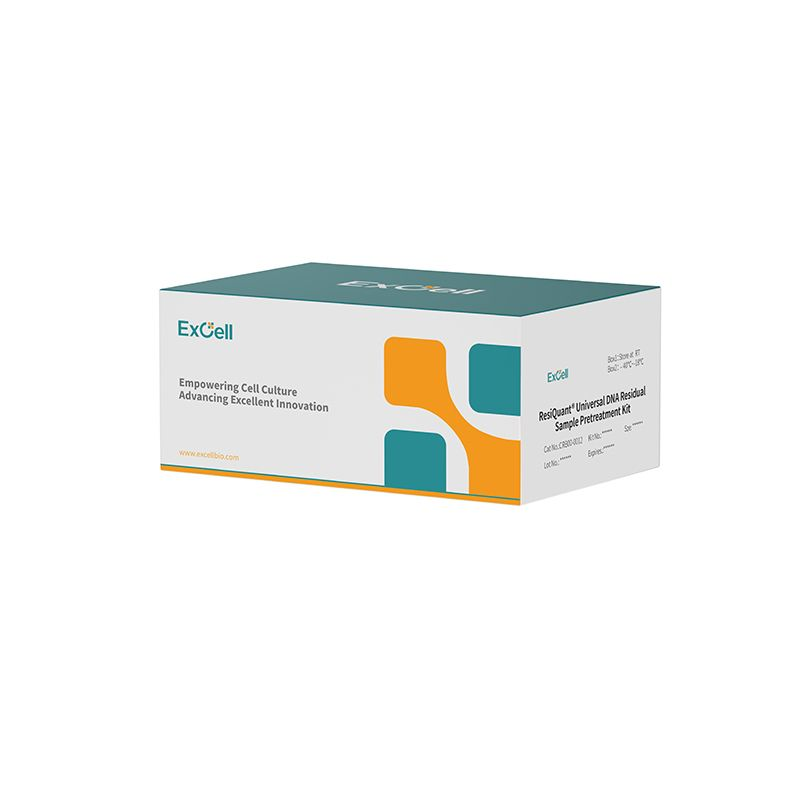
High-performance solutions, such as those developed by ExCell Bio, are engineered to detect trace amounts of leached Protein A even in highly concentrated antibody harvests. When the LLOQ is sufficiently low, manufacturers can gain a clearer picture of their purification efficiency, allowing for process optimization that stays well ahead of regulatory thresholds.
2. Broad Dynamic Range for Process Versatility
In a bioproduction workflow, samples are taken at various stages—from post-capture eluates to the final drug substance. These samples contain vastly different concentrations of contaminants. A residual Protein A detection kit with a narrow dynamic range forces technicians to perform multiple serial dilutions, increasing the margin for human error and extending turnaround times.
A superior kit offers a broad dynamic range (often spanning from low pg/mL to high ng/mL). This versatility allows the same assay protocol to be used across different departments, from R&D to final Quality Control (QC), ensuring data consistency throughout the product lifecycle.
3. Sample Compatibility and Matrix Effects
One of the greatest hurdles in impurity testing is the “matrix effect.” The presence of high concentrations of the therapeutic antibody itself can interfere with the assay, either by competing for binding sites or by physically masking the residual Protein A.
When reviewing the technical specifications of a residual Protein A detection kit, it is vital to check for “Log Reduction” capabilities and recovery rates in the presence of diverse IgG subclasses. ExCell Bio emphasizes the importance of sample pre-treatment and specialized buffers that dissociate Protein A/IgG complexes. Without effective dissociation, the assay will consistently underreport the level of contamination, leading to false-negative results that could jeopardize a batch during a regulatory audit.
4. Ease of Use and “Time-to-Result”
In a high-stakes B2B manufacturing environment, time is a literal cost. A residual Protein A detection kit that requires overly complex manual steps or unconventional incubation periods can become a bottleneck.
Criteria for ease of use should include:
Pre-coated plates: Reducing preparation time and variability.
Standardized protocols: Ensuring that different shifts of technicians can achieve the same results.
Short incubation times: Allowing for “at-line” testing where results can inform process decisions in near real-time.
By streamlining the workflow, companies can reduce labor costs and minimize the risk of “re-tests” caused by procedural errors. ExCell Bio kits are designed with the end-user in mind, providing clear instructions and stable reagents that fit seamlessly into standard ELISA automated workstations.
5. Regulatory Compliance and Documentation
Finally, for B2B procurement, the kit is only as good as its documentation. A reputable residual Protein A detection kit must come with comprehensive validation data. This includes:
Accuracy and Precision studies: Intra-assay and inter-assay variability.
Specificity data: Ensuring no cross-reactivity with other process-related impurities.
Stability testing: Guaranteeing performance over the shelf-life of the kit.
Choosing a partner like ExCell Bio ensures that the analytical tools you use are backed by a robust quality management system, making the transition from clinical trials to commercial manufacturing much smoother.
Conclusion
Selecting the right method for monitoring residual Protein A is a foundational step in ensuring the safety of biologic medicines. By focusing on sensitivity, dynamic range, and matrix compatibility, biopharmaceutical companies can protect their pipeline and their patients. The residual Protein A detection kit offered by ExCell Bio provides the precision and reliability required to meet today’s rigorous global standards.