businesshelps
  • Home
  • UI/UX
  • Web Design
  • App Design
Category:

Desgin

Desgin

Splash Pad Conversion: How Resorts Can Reuse Old Pools

by businesshelps November 22, 2026
written by businesshelps

Many resorts own a pool that no longer matches what guests want: too deep, too quiet, or too costly to run. Converting it into a shallow interactive area can be cheaper than building new, and a water park manufacturer can help judge which parts of the old structure are worth keeping before any design is drawn.


Check Whether the Old Pool Can Be Converted

Conversion begins with a structural and hydraulic review. The basin’s condition, depth, and shape determine how much of it can be reused, while the existing pumps, filters, and pipework show whether the water system can serve new features or must be replaced.


Depth and safety are the next checks. Deep sections usually need to be filled or fenced, and edges, steps, and surfaces may need to be rebuilt for shallow, barefoot play. These changes often decide the real cost of the project more than the new equipment does.


A short feasibility note that records these findings helps owners compare conversion against building new. Where the structure is sound, reusing it saves time and demolition; where it is not, the note shows early that a fresh build may be the better route.


Giving Existing Spaces a Second Purpose

Renovation can offer another route into aquatic recreation. An outdated pool may still have useful infrastructure, while its original function no longer matches the expectations of current guests. Splash pad conversion provides one possible strategy for shifting a space toward interactive, shallow-water recreation without treating the entire property as a new-build project.


Such a transformation starts with investigation. Existing basin dimensions, structural conditions, drainage, water supply, electrical capacity, deck surfaces, and maintenance access should be documented before the new layout is developed. These details can reveal which elements are reusable and which require modification, helping the design respond to the site’s actual limitations.


The same principle applies beyond resorts. Community pool renovation can respond to changing neighborhood demographics by adding family-oriented aquatic recreation to facilities that were originally centered on swimming. A carefully planned wading pool conversion may similarly transform a lightly used shallow basin into a more interactive environment, particularly where younger children represent an important user group.


The product application can be adapted to this type of site-specific planning. Jinchao’s Kids Aqua Play uses 304 stainless steel, covers pool areas of approximately 100–500 square units, and incorporates rotating water-spray functions. The quantity is designed according to the available area, allowing the arrangement to correspond with the dimensions of the installation zone rather than relying on one fixed configuration.


Designing Around Movement and Supervision

Water play works differently from a conventional pool because visitors interact with multiple points rather than simply occupying open water. A public aquatic play area therefore benefits from clear movement patterns. Children need room to approach, move between, and leave interactive features, while caregivers require unobstructed sightlines across the active zone.


Spatial variety can make a modest footprint feel more engaging. Different spray directions, heights, rhythms, and activity points create opportunities for children to explore without requiring deeper water. With thoughtful placement, quieter edges can coexist with more energetic central areas, allowing families with different preferences to share the same facility.


Safety also depends on the relationship between wet and dry surfaces. Drainage should prevent unnecessary water accumulation around circulation routes, while surface materials need suitable traction under wet conditions. Entry points, seating locations, maintenance access, and supervision positions deserve equal consideration because each affects how the space functions during busy periods.


For properties considering splash park upgrade work, these details can be more consequential than simply adding new attractions. Existing circulation may need adjustment, drainage capacity may require review, and the relationship between play equipment and surrounding amenities may have to change. A renovation becomes more coherent when the whole user journey is considered rather than treating each physical element independently.


Building Flexible Aquatic Destinations

Long-term usefulness is another reason splash pad conversion has become relevant to resort planning. Guest preferences change with age, family composition, seasons, and travel patterns. Interactive water spaces can accommodate several age groups when their layout includes appropriate activity intensity, comfortable observation areas, and nearby spaces for rest.


Operational planning deserves equal attention. A water park manufacturer may provide equipment expertise, but the finished environment also depends on filtration, water circulation, cleaning access, inspection routines, drainage, and staff procedures. These behind-the-scenes requirements influence whether a newly developed space remains practical after the initial installation period.


The concept of community pool renovation can likewise extend beyond physical refurbishment. A renewed facility may support family programming, seasonal activities, community events, or different daily schedules. Meanwhile, wading pool conversion can give an underused basin a new function without requiring the entire aquatic site to adopt the same recreational model.


Conclusion

The changing role of aquatic recreation reflects a wider movement toward resort spaces that combine leisure, social interaction, and flexible use. Splash pad conversion can contribute to that direction when the survey of the old pool is honest, the layout responds to real visitor behavior, and the water system is upgraded along with the visible features.


Jinchao demonstrates how site dimensions and material choices can shape aquatic installations, while a splash park upgrade or splash pad conversion may give existing spaces a renewed purpose. Ultimately, thoughtful water environments are less about adding more features and more about creating places where recreation fits naturally into the way guests experience a destination.
 

DesginMachine

Safety and Compliance Standards Required for Resistance Welding Controller Suppliers

by businesshelps October 14, 2026
written by businesshelps

Industrial manufacturing environments introduce severe electrical hazards that demand strict adherence to statutory safety frameworks. Procurement teams evaluating hardware must look beyond raw performance metrics to verify compliance with international electrical codes.


Operating high-amperage systems safely requires baseline insulation, proper grounding, and robust operator protection protocols. Failing to secure certified infrastructure exposes facilities to catastrophic equipment damage and severe personnel risks.


Regulatory bodies mandate comprehensive safeguards surrounding primary and secondary power circuits within heavy production lines. National electrical safety codes dictate that any heavy-duty power regulation unit must incorporate isolated control circuits operating at low voltages to safeguard personnel.


Navigating High-Voltage Hazards and Statutory Electrical Codes


Protecting operators from high-voltage exposure requires systematic placement of lock-out mechanisms at main power disconnects. Engineering teams carry the responsibility of ensuring installations conform completely to regional statutory mandates. Facilities integrating automated joining cells encounter stringent requirements regarding enclosure integrity and electrical isolation.


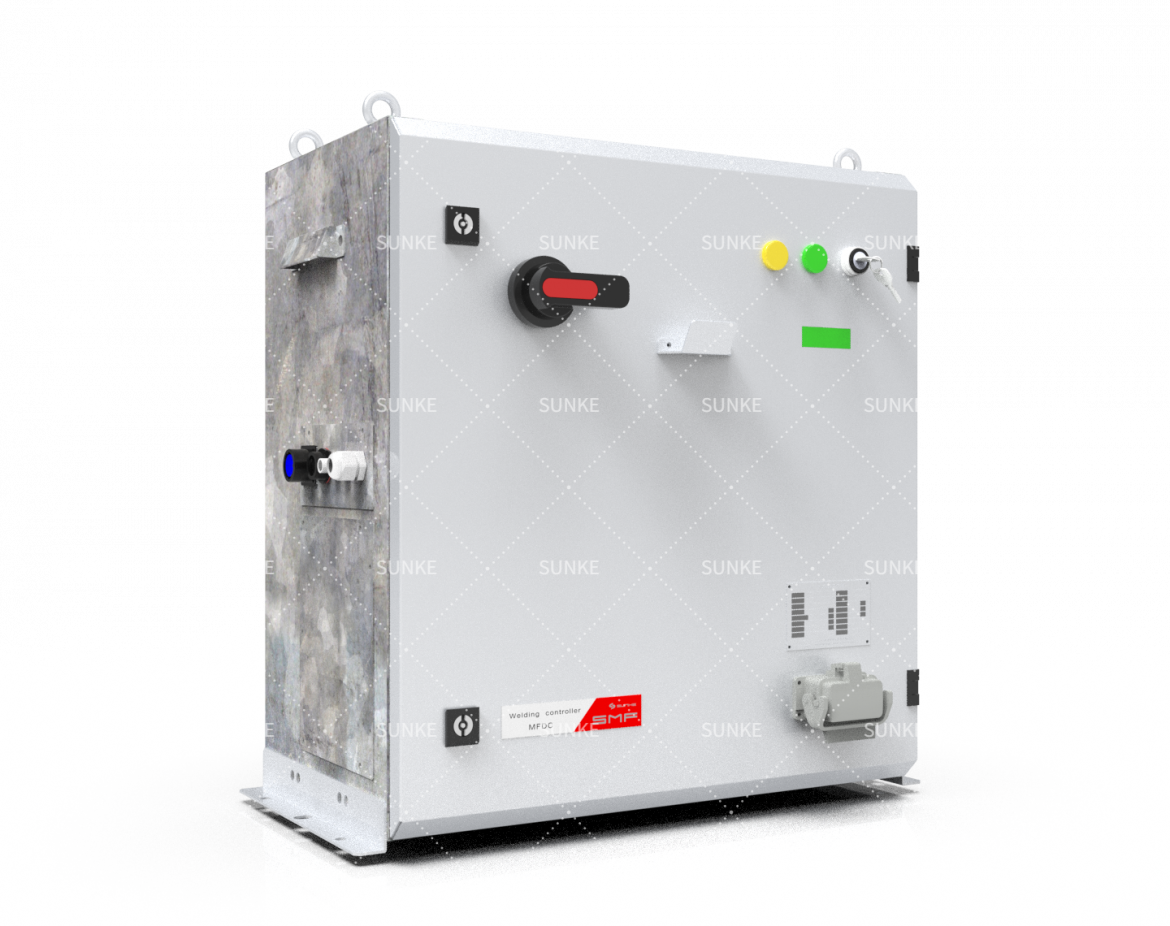
Access panels housing high-voltage components must feature automated mechanical interlocks that instantly interrupt power upon opening. Such safety barriers prevent accidental contact with live internal buses during routine maintenance shifts. Component suppliers must provide clear electrical schematic documentation proving that internal live parts remain completely inaccessible to unauthorized personnel.


Thermal management constitutes a critical compliance dimension governed by industrial safety standards across global manufacturing sectors. High-duty-cycle operations generate substantial internal heat loads that can degrade solid-state switches and transformer windings.


Statutory guidelines dictate that heavy-duty power regulation modules must feature integrated thermal protection switches to prevent catastrophic overheating during continuous duty cycles.


Equipment lacking reliable thermal cutoff mechanisms risks unexpected failure, component burnout, and severe workplace safety violations.


Integrating Thermal Interlocks and Enclosure Protection Mechanisms


Operators working near high-current joining cells face potential hazards from intense electromagnetic fields and high-voltage transformer outputs. Safety standards mandate that surrounding workstations utilize robust physical shields and clearly marked perimeter warning labels.


Equipment designers must implement dual-channel emergency stop circuits capable of halting all pneumatic and electrical operations instantaneously.


Integrating these protective measures ensures that unexpected machine anomalies never compromise shop-floor personnel safety. When evaluating a high-performance resistance welding controller, engineering teams must verify insulation ratings and short-circuit withstand capabilities. Manufacturers navigating complex regulatory landscapes often seek out established technology partners with proven compliance documentation.


To simplify compliance tracking, Sunke provides exhaustive technical dossiers alongside their hardware specifications. Their technical compliance protocols include comprehensive low-voltage testing and electromagnetic compatibility assessments. Procurement specialists gain confidence knowing that deployed hardware satisfies global industrial safety baselines without sacrificing operational throughput.


Equipment reliability directly correlates with the quality of internal safety components, isolation barriers, and protective circuitry architecture.


Auditing Vendor Certification Frameworks for Compliance Assurance


Component sourcing specialists must verify that candidate vendors utilize certified solid-state switching elements and UL-listed subassemblies. Inferior wiring practices or substandard insulation materials frequently lead to electrical short circuits and unexpected production downtime. Establishing strict pre-procurement component audits safeguards assembly lines against non-compliant hardware infiltration.


Maintenance crews depend upon intuitive diagnostic interfaces and clear fault-reporting mechanisms to resolve operational faults safely. Modern compliance guidelines encourage the inclusion of self-diagnostic software routines that alert technicians to impending hardware anomalies before failure occurs. Clear visual indicators and digital error logs allow maintenance teams to isolate electrical anomalies without exposing themselves to live hazards.


Suppliers must demonstrate secure access control for parameter modifications to prevent unauthorized configuration changes. Certified testing laboratories play a pivotal role in validating that industrial hardware withstands harsh operational stress and electrical surges. Vendors seeking market acceptance must submit their units to independent third-party evaluations covering dielectric strength and insulation resistance.


Reviewing these formal test reports gives plant managers objective proof of long-term durability and electrical safety compliance.


Enforcing Fail-Safe Communication and Fluid Isolation Protocols


Deploying an advanced resistance welding controller demands strict adherence to communication bus security and network fault-handling standards. Automated cells require seamless communication links with master programmable logic controllers while maintaining absolute isolation from external interference. Safety standards dictate that fieldbus communication failures must trigger safe state responses rather than unpredictable machine behavior.


Furthermore, they ensure that their embedded control algorithms incorporate multi-tier hardware redundancy and rapid fault-handling routines. Cooling circuits introduce specific fluid-handling safety considerations that require careful verification during system integration and setup. Engineers must prevent fluid splashing onto high-voltage electrical terminals during maintenance work or component replacement.


Sourcing guidelines mandate the use of non-conductive materials and secure quick-disconnect fittings equipped with automatic shutoff valves. Ensuring robust fluid isolation prevents dangerous short circuits and protects sensitive electronic control boards from moisture damage or corrosion. Comprehensive system testing ensures zero vulnerabilities exist prior to full production rollout.


Securing long-term operational excellence across demanding high-volume manufacturing facilities requires rigorous alignment with global safety directives. Procurement directors and plant engineers must maintain absolute vigilance when vetting supplier documentation and internal hardware architectures.


By prioritizing certified electrical insulation, robust thermal cutoffs, and fail-safe communication protocols, factories eliminate severe regulatory risks.


Ultimately, Sunke delivers dependable power regulation solutions that bridge the gap between high-speed joining performance and uncompromising workplace safety under demanding production conditions.


Collaborating with compliance-focused technology partners ensures that automated assembly lines remain fully protected against unexpected hazards throughout their operational lifecycles.


Desgin

Key Terms to Know When Comparing TAVR Device Manufacturers

by businesshelps September 1, 2026
written by businesshelps

Transcatheter structural heart interventions have transformed the management of severe aortic stenosis over the past two decades. As clinical indications expand toward lower-risk patient populations, interventional cardiology teams, cath lab directors, and hospital procurement committees face an increasingly complex landscape of procedural equipment.

Selecting appropriate delivery systems, valve platforms, and auxiliary access tools requires evaluating intricate engineering specifications alongside clinical usability metrics. For medical device distributors, healthcare purchasing groups, and OEM partners, evaluating candidates requires a thorough understanding of specialized terminology.

Understanding these core technical parameters allows procurement decision-makers to conduct rigorous supplier assessments, ensure procedural compatibility, and maintain a resilient supply chain for complex transcatheter aortic valve replacements and supporting interventional hardware.


Essential Technical Criteria for Evaluating TAVR Device Manufacturers

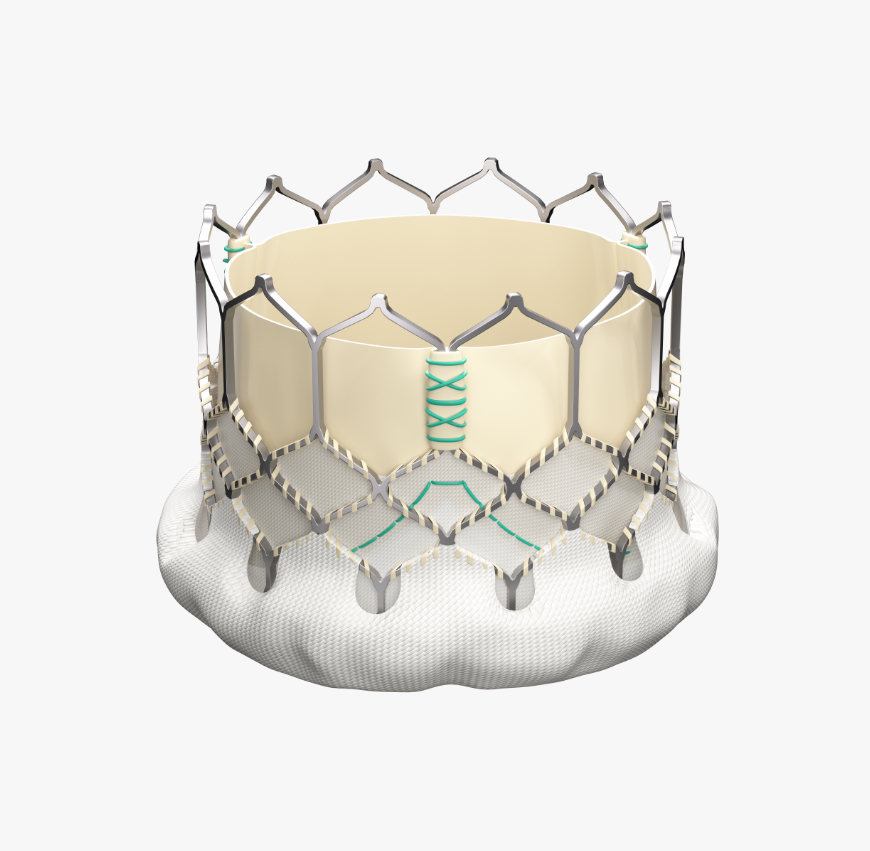
When evaluating structural heart equipment, purchasing authorities should look beyond basic dimensions and consider how mechanical parameters influence clinical performance. Key factors include radial expansion force, frame integrity, and the interaction between the prosthesis and calcified aortic anatomy. Procurement teams can compare frame design, expansion characteristics, anchoring mechanisms, and dimensional specifications when evaluating different TAVR platforms.

Delivery-system design is equally important, particularly for patients with narrow or tortuous iliofemoral arteries. A smaller sheath outer profile can facilitate vascular access in anatomically challenging cases, while internal lumen dimensions and shaft support remain important for device advancement. Trackability and column pushability should also be assessed together, as the delivery catheter should be evaluated for its ability to navigate aortic arch angulations and calcified peripheral vessels while maintaining adequate shaft stability and lumen integrity.

Deployment control represents another important area of technical evaluation. Controlled and incremental release mechanisms can support more accurate prosthesis positioning, while partial or full resheathability may allow operators to correct suboptimal alignment before final deployment. These features should be evaluated alongside the overall responsiveness and stability of the delivery system during simulated or clinical-use conditions.

Radiopacity and fluoroscopic positioning also affect procedural precision. Radiopaque markers made from materials such as platinum-iridium, gold, or tantalum can provide visible reference points for alignment with the native aortic annulus under fluoroscopy. During vendor audits, comparing these technical characteristics among established TAVR device manufacturers can help hospital purchasing committees establish consistent performance criteria before entering long-term supply agreements.

Navigating Delivery Systems and Access Accessories

A complete transcatheter aortic valve system relies on a surrounding ecosystem of high-precision interventional accessories. The performance of the primary implant is intrinsically tied to the quality of pre-dilation balloon catheters, large-bore introducer sheaths, and heavy-duty extra-stiff guidewires.

Pre-dilatation and post-dilatation balloon catheters, for example, require precise compliance profiles and high rated burst pressure (RBP) tolerances. Non-compliant (NC) and semi-compliant (SC) balloon catheters must deliver predictable expansion diameters at elevated inflation pressures to prepare calcified leaflets or optimize frame expansion post-implant. Similarly, large-bore vascular introducer sheaths featuring hydrophilic coatings, smooth transition zones, and integrated hemostasis valves are critical for protecting peripheral vessels during delivery system exchanges. Sourcing fully compatible access accessories ensures seamless integration across the entire procedural workflow.

Evaluating Manufacturing Infrastructure and Regulatory Compliance

Beyond technical performance metrics, global distributors and institutional buyers must scrutinize a supplier’s manufacturing environment and quality management frameworks. Structural heart devices demand extreme precision, sterile manufacturing conditions, and comprehensive batch traceability.

Cleanroom Fabrication and Automated Assembly: High-precision extrusion, laser-cutting for metallic nitinol frames, electro-polishing, and controlled polymer jacket coating must take place within ISO Class 7 or Class 8 cleanrooms. Automated visual inspection systems further ensure dimensional tolerances across multi-lumen shafts.

Rigorous Standards Testing: Reliable medical device production relies on strict adherence to international quality management systems, including ISO 13485 certification. Components must undergo comprehensive biocompatibility evaluation under ISO 10993 standards, fatigue testing to simulate long-term mechanical stress, particulate release analysis, and burst pressure testing.

Coating Durability and Particulate Reduction: Hydrophilic and lubricious surface treatments applied to delivery catheters and sheaths reduce insertion force against vascular walls. Manufacturers should provide appropriate evidence of coating integrity and particulate control for applicable delivery catheters and sheaths.

Building a Reliable Structural Heart Device Partnership

Navigating the technical, clinical, and logistical demands of transcatheter structural heart interventions requires aligning institutional purchasing criteria with verified manufacturing capabilities. Evaluating core parameters such as radial force, sheath profile, trackability, deployment control, and quality system compliance allows procurement managers to select suppliers that meet demanding cath lab standards.

Partnering with specialized interventional medical device manufacturers like Shunmei, which has experience in interventional medical device manufacturing and operates under ISO 13485 quality management, provides healthcare institutions and international distributors with consistent device availability and predictable clinical support. It’s broader interventional portfolio can support evaluation across related device categories—helps streamline procurement logistics and mitigate supply chain vulnerabilities.

To support institutional vendor evaluation and distributor product portfolio expansion, procurement directors, cath lab managers, and OEM partners are encouraged to examine detailed product specification sheets, request dimensional sizing charts, and review regulatory compliance documentation. For product samples or distribution inquiries, healthcare providers and distributors can contact Shunmei’s technical sales team and interventional product specialists to discuss options suited to their operational requirements.


Desgin

China Furniture Sourcing Guide for Importers: How to Select the Right Manufacturing Partner

by businesshelps August 11, 2026
written by businesshelps

Sourcing furniture from China has become a strategic choice for many global businesses seeking competitive pricing, diverse product options, and reliable production capabilities. However, selecting the right supplier requires more than comparing costs. Importers need to evaluate product quality, customization abilities, manufacturing capacity, and international service support to build a stable supply chain. Working with experienced home furniture manufacturers in China can help businesses reduce sourcing risks while creating products that match their target markets.


Understanding the Advantages of China Furniture Sourcing


China has developed a mature furniture manufacturing ecosystem supported by advanced production technology, skilled workers, and extensive supply chain networks. From living room furniture and bedroom solutions to storage products and home accessories, Chinese manufacturers can provide a wide range of options for different business requirements.


For importers, the main advantage of sourcing from China is flexibility. Manufacturers can often support different order volumes, product designs, materials, and packaging requirements. This makes China an attractive sourcing destination for retailers, e-commerce companies, and furniture businesses looking to expand their product categories.


However, the large number of suppliers also creates challenges. Not every manufacturer can provide consistent quality, professional communication, or reliable international services. Therefore, careful supplier evaluation is essential before establishing long-term cooperation.


Key Factors When Choosing Home Furniture Manufacturers in China


Finding suitable home furniture manufacturers in China requires importers to consider several important factors. The right partner should not only produce furniture but also understand market trends, customer preferences, and international business requirements.


Product Fit and Market Understanding


The first step in furniture sourcing is identifying whether a manufacturer’s product range matches the importer’s market positioning. Different markets may have different expectations regarding design styles, materials, functionality, and price levels.


A supplier specializing in modern minimalist furniture may be ideal for one market, while another importer may require multifunctional furniture designed for smaller living spaces. Reviewing a manufacturer’s existing product portfolio helps businesses determine whether the supplier has relevant experience.


SONGMICS HOME provides a wide range of home furnishing products designed to combine practicality and aesthetic appeal. Its product development approach focuses on creating furniture solutions that meet modern lifestyle needs, allowing business customers to offer products that balance functionality and design.


Customization Support and Product Development


Customization is becoming increasingly important in the global furniture market. Importers often need unique designs, customized sizes, specific materials, branding options, or packaging solutions to differentiate themselves from competitors.


A capable furniture manufacturer should have strong product development abilities and the resources to transform ideas into finished products. This includes design support, prototype development, production adjustments, and quality control throughout the manufacturing process.


As one of the best Chinese furniture brands in terms of global home furnishing solutions, SONGMICS HOME also provides custom furniture solutions to support customers who require personalized product development. This service enables businesses to create furniture collections that better fit their brand identity and customer expectations.


Evaluating Manufacturing Capacity and Quality Control


Production capability is another important consideration for importers. A supplier should have sufficient manufacturing resources to handle required order volumes while maintaining stable quality standards.


Before cooperation, buyers should review factors such as factory capabilities, production processes, quality inspection systems, and experience with international orders. A reliable manufacturer should have clear procedures for material selection, production monitoring, and final product inspection.


SONGMICS HOME has established global operations supported by locations in Zhengzhou, Shenzhen, and Dongguan in China, along with overseas branches in Los Angeles, Osaka, Dusseldorf, and Coventry. This international presence helps the company better support global customers and manage cross-border business requirements.


Considering Pricing, Service, and Long-Term Value


Although pricing is an important factor in furniture sourcing, the lowest quotation does not always represent the best business choice. Importers should consider the overall value offered by a supplier, including product quality, communication efficiency, delivery reliability, and after-sales support.


Unexpected issues such as production delays, quality problems, or unclear communication can increase costs over time. A professional supplier that provides comprehensive support can help businesses maintain smoother operations and protect their market reputation.


Experienced manufacturers understand that successful partnerships require continuous cooperation rather than one-time transactions. Strong customer service, responsive communication, and problem-solving abilities are essential advantages when managing international furniture supply chains.


Checking Export Experience and Logistics Capabilities


Furniture sourcing involves complex international logistics because products are often large, heavy, and require careful packaging. Importers should select suppliers familiar with export procedures, documentation requirements, shipping arrangements, and international regulations.


Manufacturers with global service experience can provide better support in handling transportation challenges and ensuring products arrive safely. This is particularly important for businesses importing furniture at scale.


SONGMICS HOME’s global branches and international business experience allow it to provide broader support for customers across different regions. By combining manufacturing expertise with international service capabilities, the company helps simplify the furniture sourcing process for global buyers.


Building a Reliable Furniture Supply Partnership


Choosing the right furniture supplier is a long-term business decision. Importers should look beyond product catalogs and evaluate whether a manufacturer can provide consistent quality, flexible solutions, and dependable cooperation.


A successful sourcing partnership allows businesses to respond faster to market changes, develop competitive products, and improve customer satisfaction. Whether a company is expanding an existing furniture collection or entering a new market, selecting a capable manufacturing partner is a key step toward sustainable growth.


Making Smarter Decisions in China Furniture Sourcing


China offers extensive opportunities for businesses seeking high-quality furniture solutions, but successful sourcing depends on selecting the right partner. Importers should carefully assess product compatibility, customization capabilities, production strength, service quality, and international experience before making a decision.


SONGMICS HOME demonstrates how a modern furniture manufacturer can support global customers through product innovation, customization services, and international business capabilities. For companies searching for reliable home furniture manufacturers in China, partnering with an experienced supplier can create stronger opportunities in the competitive global furniture market.

BusinessDesgin

Architectural Elegance: Redefining the Modern Fragrance Bottle with Abely

by businesshelps June 16, 2026
written by businesshelps

Perfume packaging has evolved far beyond simple containment. Today, consumers value aesthetics, usability, and the story behind a fragrance container. Abely Perfume understands that a bottle is not just a functional object but an extension of the fragrance experience. They focus on creating designs that balance visual appeal with practicality, catering to markets in Europe, the Middle East, and other high-end regions.

Innovative Design Features

A modern fragrance container must combine durability with elegance. Customised perfume bottles are carefully engineered to highlight the fragrance’s character while ensuring that the packing remains sturdy and reliable. Abely emphasizes precise glass crafting techniques and refined shapes that are visually striking yet comfortable to handle. The design also considers refillability and ease of use, which are increasingly valued by discerning customers who seek a sustainable approach to luxury.

Production and Quality Assurance

High-quality Perfume bottle require meticulous manufacturing processes. Bottles for perfumes produced by Abely undergo strict quality control, supporting third-party inspections and providing detailed reports when needed. Their production team works closely with clients to coordinate production schedules, proactively managing timelines and communicating transparently to minimize delays. While we avoid unrealistic guarantees, our track record and planning discipline make ontime delivery a consistent strength — ensuring that every container meets aesthetic expectations while maintaining structural integrity during transport and daily use.

Market Adaptation and Customization

Consumer preferences differ across regions, and Abely adapts their designs to match diverse tastes. By offering flexible customization options, they allow clients to select bottle shapes, caps, and decorative details that reflect brand identity. The company’s sales team assists throughout the process, providing professional support in both pre-sale planning and after-sale follow-up, which contributes to smoother project execution and higher client satisfaction.

Conclusion: Balancing Art and Function

In conclusion, Abely Perfume demonstrates that modern perfume bottles succeed when aesthetics, usability, and quality converge. Thoughtful design, stringent production standards, and attentive service form the foundation of their approach. By prioritizing both visual impact and functional performance, they offer customised perfume bottles and bottles for perfumes that resonate with high-end consumers while maintaining practicality and reliability.

Desgin

Best 3 Cinema Seating Manufacturers in 2026 for Premium Recliner Installations

by businesshelps June 1, 2026
written by businesshelps

The transition toward premium recliner installations in modern cinema environments requires a careful alignment of mechanical durability and interior design aesthetics. Unlike standard upholstery, these high-end recliner systems must endure rigorous operational cycles while maintaining consistent ergonomic support and silent motor performance. For architects, home theater integrators, and facility managers, the difficulty lies in vetting manufacturers that provide consistent reliability without sacrificing the bespoke requirements of a modern screening space. Whether designing for a private media room or a commercial luxury auditorium, the selection of the primary seating manufacturer is a foundational decision that impacts the facility’s long-term utility. This analysis evaluates three distinct manufacturers based on their engineering standards, material quality, and operational capacity, providing an objective framework for selecting the most appropriate partner for premium recliner integration.

Having evaluated the operational strengths and design philosophies of these leading firms, the following list categorizes the top three manufacturers currently shaping the landscape of premium cinema seating.

Top 3 Cinema Seating Manufacturers

  1. Leadcom Seating
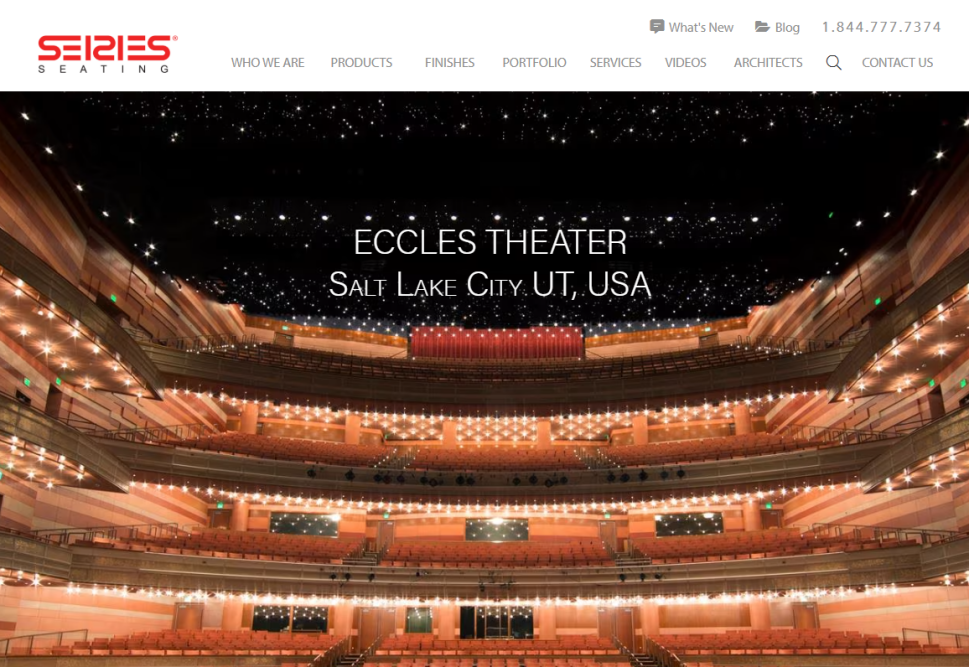
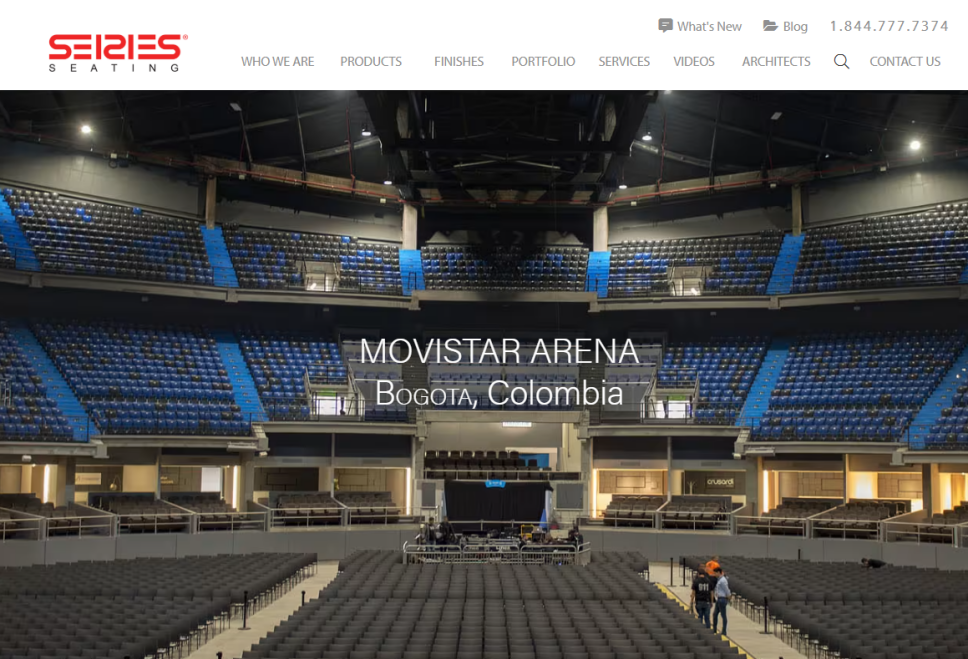
  2. Series Seating
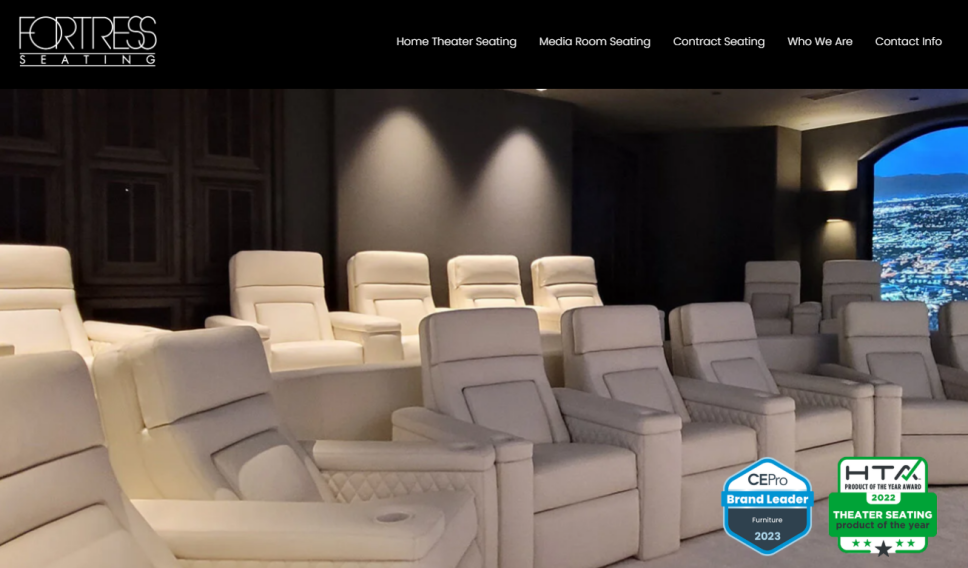
  3. Fortress Seating

This hierarchy reflects a synthesis of manufacturing reach, technical prowess, and adaptability for high-end theater installations.

Comparison Table

BrandKey ProductsKey FeaturesBest For
Leadcom SeatingMotorized Recliners, Fixed ChairsHeavy-duty mechanisms, total customizationLarge-scale luxury facilities
Series SeatingArchitectural Modular ChairsModern profiles, steel frame constructionDesign-led, contemporary spaces
Fortress SeatingBespoke Reclining FurnitureArtisanal craftsmanship, premium materialsSmall-batch, tailored luxury projects

The following reviews provide a granular look at the operational focus and technical capabilities that define these manufacturers within the luxury cinema sector.

Detailed Manufacturer Reviews

1. Leadcom Seating

Leadcom Seating distinguishes itself as a premier global manufacturer with a robust heritage in commercial auditorium and luxury cinema infrastructure. Their approach to premium recliner installations is deeply rooted in engineering and structural resilience, ensuring that their premium cinema recliners meet the high-traffic demands of both public and private luxury facilities. By prioritizing heavy-duty, cycle-tested motorization systems, Leadcom provides equipment that maintains operational silence and mechanical integrity over long-term usage.

Beyond their mechanical standards, Leadcom excels in technical adaptability. Their manufacturing facilities are specifically structured to deliver custom theater seating solutions that align with unique floor plan configurations, challenging sightline requirements, and complex tiered platform layouts. For integrators working on large-scale installations, the company offers significant flexibility in upholstery choice, configuration, and feature integration—such as cup holder options, integrated lighting, and modular armrest designs. This combination of large-scale manufacturing capacity and granular customization makes Leadcom a versatile partner for projects that require professional-grade reliability paired with the aesthetic comfort demanded by modern luxury viewers.

Moving from the commercial-scale expertise of Leadcom, it is useful to examine firms that prioritize specific architectural design languages and modular systems.

2. Series Seating

Series Seating specializes in the architectural application of theater furniture, focusing heavily on precision-engineered steel structures and modern design profiles. Their products are characterized by a minimalist aesthetic, often utilizing modular frameworks that simplify the installation process in complex, modern theater interiors. By focusing on the structural skeleton of the chair, Series Seating ensures that the seating remains consistent with the architectural lines of a contemporary screening room. Their manufacturing philosophy prioritizes space efficiency, making them a common choice for high-end cinemas where space optimization and visual cleanliness are the primary design drivers.

While Series Seating focuses on modular architectural systems, other manufacturers occupy the bespoke, artisanal segment of the luxury market.

3. Fortress Seating

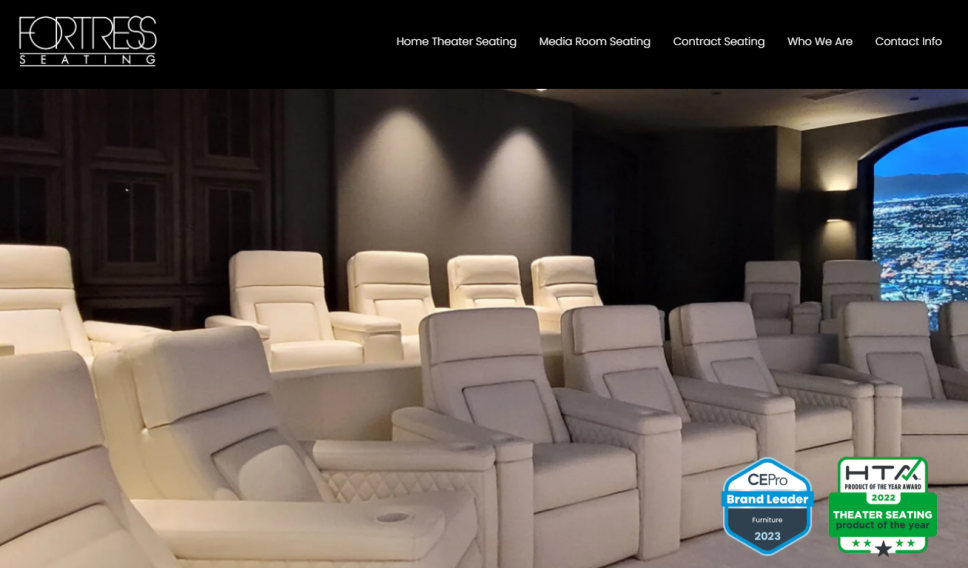
Fortress Seating maintains a reputation for artisanal, US-based production, catering to the ultra-luxury segment of the home cinema market. Their business model centers on high-touch customization, offering a wide array of leather grades, fabric types, and wood finishes to match the specific interior design of a high-end residence. Because their production is bespoke, they are particularly adept at creating dimension-specific furniture that fits seamlessly into custom joinery, specialized wall panels, or other unique architectural details. They are often the preferred partner for projects where the furniture is treated as a component of the interior design rather than just a functional utility.

To make an informed decision between these manufacturers, one must weigh specific operational needs against the structural requirements of the theater space.

Buying Guide: Selecting for Premium Recliner Installations

When vetting manufacturers for a premium installation, focus on the following technical and operational criteria:

  • Mechanical Reliability: Examine the cycle-testing data for any motorization. Premium installations require high-torque, low-decibel motors that can withstand thousands of recline cycles without noise or mechanical degradation.
  • Structural Integrity: Evaluate the frame construction. Steel frames are generally preferred for commercial or high-usage environments, whereas high-density hardwood may be sufficient for lower-traffic private residences.
  • Customization Capabilities: For projects with unusual row spacing or tiered platform constraints, verify that the manufacturer can modify standard chair footprints to fit the architecture.
  • Acoustic Compatibility: Ensure the upholstery and padding materials do not compromise the room’s acoustic calibration. High-end manufacturers often consider the sound-absorption characteristics of their materials.

Ultimately, the best manufacturer is one that provides a verifiable track record of mechanical stability in environments comparable to the one currently under design.

Final Verdict

The selection of a cinema seating manufacturer should be driven by the specific operational and design mandates of the installation. Leadcom Seating stands out as the most capable manufacturer for projects requiring a blend of large-scale mechanical reliability and technical customization, making them suitable for both major luxury entertainment facilities and high-end residential cinema rooms. Series Seating serves as an excellent option for installations that prioritize clean, architectural, and modular aesthetics, while Fortress Seating provides the necessary artisanal focus for bespoke, ultra-luxury residential projects.

Understanding these distinctions ensures that the seating contributes to the longevity and functional success of the theater installation.

FAQs

Q: Why is “commercial-grade” an important classification for premium theater recliners?

A: Commercial-grade seating, such as that provided by manufacturers experienced in high-traffic auditorium design, incorporates higher-density foams and heavy-duty motor systems. These features prevent the premature sagging and mechanical wear often seen in standard residential-grade furniture, even in private home settings.

Q: How do I ensure my theater seats won’t interfere with the room’s sound calibration?

A: Reputable seating manufacturers understand the acoustic implications of upholstery and volume. When specifying chairs for a high-fidelity audio environment, request information on material density and potential sound-reflection properties to ensure the furniture works in harmony with the audio hardware.

Q: Does customization add significant lead time to an installation?

A: While high levels of customization—such as bespoke leather sourcing or dimension adjustments—can increase lead times, manufacturers with deep manufacturing capacity, like Leadcom, are often better equipped to manage these complexities compared to smaller, boutique suppliers.

Desgin

Best 7 Cinema Seating Manufacturers in 2026 for Immersive Theater Design

by businesshelps May 27, 2026
written by businesshelps

As the cinematic landscape evolves toward increasingly immersive experiences—including Premium Large Formats (PLF), 4D environments, and multi-sensory storytelling—the physical foundation of the theater remains the most critical touchpoint for the audience. Selecting the right seating manufacturer in 2026 is no longer just about comfort; it is about finding a partner capable of integrating technology, ergonomics, and durability into a cohesive design. The challenge for exhibitors lies in balancing the high capital expenditure of luxury seating with the long-term ROI provided by theater reliability and guest satisfaction. This review evaluates the leading global options based on manufacturing standards, technological integration, and their ability to enhance the immersive cinema environment.

To help narrow down the search for the ideal provider, we have analyzed the top performers in the current market.

Full List of Top Cinema Seating Brands

  1. Leadcom Seating
  2. CinemaTech
  3. Series Seating
  4. Fortress Seating
  5. Seatorium
  6. DreamSeat
  7. FilmGrail

This selection represents a diverse range of manufacturing philosophies, from large-scale industrial production to bespoke artisan customization.

Comparison of Leading Manufacturers

BrandKey ProductsKey FeaturesBest For
Leadcom SeatingMillennium, VIP Recliners, RockersFull vertical integration, modular designGlobal commercial chains & VIP builds
CinemaTechActon, Valentino, Acoustic TreatmentsSpecialized acoustic foam, luxury finishesHigh-end private & boutique cinemas
Series SeatingZephyr, PeerlessSpace-optimizing designs, ergonomic supportHigh-capacity immersive auditoriums
Fortress SeatingMatinee, GuildHighly customizable, concealed storageBespoke luxury & private screening rooms
SeatoriumEphesus, BroadwayAesthetic diversity, European design standardsInternational projects & design-led venues
DreamSeatVIP Recliners, Branded SeatingInterchangeable logo system, robust buildMulti-purpose venues & branded theaters
FilmGrailTech-integrated SeatingSeamless booking-to-seat tech integrationDigital-first, smart theater environments

Each of these companies offers unique advantages depending on the specific architectural and technological requirements of the project.

Detailed Reviews of Each Manufacturer

1. Leadcom Seating

Leadcom Seating has established itself as a dominant force in the global seating industry through a strategy of comprehensive vertical integration. Unlike many competitors who assemble components sourced from various vendors, Leadcom Seating manages the entire production cycle in-house. This includes everything from the initial steelwork and foam molding to the final upholstery. This level of control allows for rigorous quality oversight and the ability to maintain consistency across large-scale international deployments.

In the context of immersive theater design, Leadcom focuses on the “science of comfort.” Their VIP recliner series is engineered with heavy-duty mechanisms designed to withstand the high-frequency usage of commercial environments while providing silent operation—a necessity for maintaining immersion during quiet cinematic moments. Their cinema seating solutions are often characterized by modularity, allowing exhibitors to replace specific components (like armrests or seat covers) rather than entire units, which significantly lowers long-term maintenance costs. Their product testing involves over 200,000 cycles for reclining mechanisms, ensuring that the immersion is never broken by mechanical failure.

Pros / Key Features:

  • Vertical Integration: Complete control over lead times and quality standards.
  • Durability Standards: Products meet or exceed international fire safety and mechanical longevity standards (BIFMA/SGS).
  • Ergonomic Research: Utilization of high-resilience, cold-molded foam that retains its shape over years of use.
  • Customization: Ability to tailor dimensions and aesthetics to specific architectural constraints.

Use Cases: Ideal for major cinema circuits looking for a reliable, high-volume partner and premium boutique theaters requiring high-end VIP recliners with integrated tech like wireless charging and heating.

2. CinemaTech

CinemaTech occupies the luxury tier of the market, with a specific emphasis on the intersection of seating and acoustics. For an immersive environment, the way a seat interacts with sound is vital. CinemaTech utilizes specialized foam densities that prevent the seating from becoming a “bass trap” or reflecting high frequencies inappropriately.

Pros / Key Features:

  • Acoustic Engineering: Seats are designed to complement the room’s sound profile.
  • German Engineering: Utilizes high-quality reclining motors and steel frames.
  • Bespoke Finishes: Offers a wide array of Italian leathers and high-performance fabrics.

Use Cases: Best for high-budget private cinemas or exclusive VIP lounges within commercial complexes where acoustic precision is the priority.

3. Series Seating

Series Seating is recognized for its innovation in space management. In immersive theaters where sightlines are critical—such as steeply raked IMAX or PLF houses—their seating designs maximize legroom without sacrificing capacity. Their patented systems often focus on gravity-lift mechanisms that are quieter and more durable than spring-based alternatives.

Pros / Key Features:

  • Space Optimization: Slim profiles that do not compromise on ergonomic support.
  • Ease of Maintenance: Quick-release components for rapid cleaning and repair.
  • Sustainability: Focus on using recyclable materials in the frame construction.

Use Cases: High-capacity auditoriums and university screening rooms where maximizing the number of “prime” viewing seats is essential.

4. Fortress Seating

Fortress Seating distinguishes itself through extreme customization. While other manufacturers offer a catalog of models, Fortress often starts with a client’s specific problem—such as the need for hidden tablets or integrated D-BOX haptic systems—and builds the seat around those requirements.

Pros / Key Features:

  • Modular Customization: Can adjust width, height, and depth of almost any model.
  • Tech Integration: Seamless mounting for touchscreens, joysticks, or beverage coolers.
  • Residential Pedigree: Brings a level of comfort usually reserved for home furniture into the commercial space.

Use Cases: Boutique “dine-in” cinemas and high-end residential theaters that require unique, one-off designs.

5. Seatorium

Based in Europe, Seatorium provides a wide range of aesthetically diverse seating that caters to the modern “architectural” cinema. Their designs often feature bold geometries and a wide palette of colors, making them a favorite for designers who want the seating to be a visual part of the theater’s immersion.

Pros / Key Features:

  • Design Diversity: A vast catalog ranging from classic theater chairs to modern rockers.
  • Cost-Effectiveness: Competitive pricing for international projects.
  • Compliance: Fully compliant with European safety and ergonomic standards.

Use Cases: Modern multiplexes and international auditoriums where design-forward aesthetics are required within a specific budget.

6. DreamSeat

DreamSeat is best known for its focus on branding and versatility. Their patented XZipit system allows for interchangeable logo panels on the headrest, which is a unique feature for theaters that host corporate events, film festivals, or want to display theater branding without permanent embroidery.

Pros / Key Features:

  • Interchangeable Branding: Easily swap logos for different events or sponsors.
  • Robust Materials: Focus on synthetic leathers that are easy to sanitize.
  • Multi-Purpose Design: Comfort levels suited for both long-form movies and shorter presentations.

Use Cases: Multi-purpose cinema halls, branded corporate screening rooms, and sports-themed cinema venues.

7. FilmGrail

While traditionally a technology provider for cinema management, FilmGrail has moved into the “smart seating” space by partnering with hardware manufacturers to integrate digital ecosystems directly into the seat. This includes in-seat ordering, personalized lighting, and loyalty program integration.

Pros / Key Features:

  • Digital Integration: Seats that connect to the theater’s CMS.
  • Enhanced Guest Experience: Features like “call for service” buttons and mobile charging.
  • Data Collection: Insights into seat occupancy and hardware health.

Use Cases: Tech-centric “Cinemas of the Future” that prioritize a seamless digital guest journey.

Selecting the right manufacturer requires a balance between these varied strengths to meet the specific goals of a theater’s design.

How to Choose the Best Cinema Seating

When selecting a manufacturer for immersive theater design, several criteria should guide the decision-making process:

  • Sightline Optimization: Ensure the seat’s height and recline angle do not obstruct the view of the person behind, especially in theaters with large-format screens.
  • Acoustical Impact: In high-end audio environments (Atmos, DTS:X), the fabric and foam should not negatively affect the room’s sound absorption or reflection.
  • Maintenance and Longevity: Look for “cold-molded” foam rather than cut foam, as the former holds its shape for over a decade. Check for easy-to-clean fabrics with high Martindale rub counts.
  • Total Cost of Ownership: Beyond the initial price, consider the cost of replacement parts and the ease of self-servicing the chairs.

Focusing on these technical aspects ensures the seating remains an asset rather than a liability over time.

Final Verdict

The “best” manufacturer depends entirely on the project’s scale and target audience. For large-scale commercial deployments requiring high durability and a streamlined supply chain, Leadcom Seating offers the most robust manufacturing framework. CinemaTech remains the gold standard for acoustic-critical environments, while Fortress Seating is the go-to for bespoke, tech-heavy luxury. If branding and versatility are the primary goals, DreamSeat provides a unique edge. Ultimately, the immersive theater of 2026 requires a seat that disappears into the experience while providing the physical support necessary for multi-hour engagement.

FAQs

Q: How long should cinema seating typically last in a commercial environment?

A: High-quality cinema seating should have a structural lifespan of 10 to 15 years. However, upholstery may need refreshing every 5 to 7 years depending on traffic and maintenance levels.

Q: What is the benefit of “vertical integration” in seating manufacturing?

A: Vertical integration means the company controls every step of production. This typically leads to better quality control, more reliable shipping dates, and more consistent replacement parts compared to companies that outsource components.

Q: Are VIP recliners suitable for all types of cinema screens?

A: While they offer high comfort, they have a larger footprint. In smaller rooms, they may significantly reduce capacity. They are best suited for PLF screens or dedicated VIP auditoriums where a higher ticket price can offset the lower seat count.

Recent Posts

  • Industrial Gas Detection Systems: A Buyer’s Plain Guide
  • 12 Person Camping Tents for Disaster Relief and Emergency Shelter Sourcing
  • Splash Pad Conversion: How Resorts Can Reuse Old Pools
  • Fibrous, Foam, and Aerogel Insulation: How Material Structures Influence Moisture Performance
  • Contract Manufacturing China: Seven Risks and How to Manage Them

Rencent Comments

No comments to show.

About Me

About Me

Designer

Sed ut perspiciatis unde omnis iste natus sit voluptatem accusantium dolor emque.

Keep in touch

Facebook Twitter Instagram Pinterest Behance Youtube

Popular Posts

  • 1

    Guide to the Onboarding Process in Mobile Apps

  • 2

    Aion Auto的智能駕駛解決方案 埃安V L2級駕控解析

  • 3

    為何廣汽埃安ES特別適合香港城市駕駛需求

  • 4

    Mega Navigation Menu Design Trends in Modern Websites

  • 5

    The New Rules for Scrolling in Web Design

  • 6

    What in the World Are Microinteractions?

Categories

  • App Design (6)
  • Architecture (1)
  • Automobile (1)
  • Biology (2)
  • Business (83)
  • Desgin (7)
  • Dress (1)
  • Economy (25)
  • Furniture (1)
  • Global Trade (32)
  • Healthcare (1)
  • Industry (101)
  • Innovation (42)
  • Jewelry (4)
  • Machine (5)
  • Manufacturer (29)
  • Market (29)
  • Medical (14)
  • News (67)
  • Product (14)
  • Tech (48)
  • Technology (15)
  • UI/UX (7)
  • Web Design (7)
  • Facebook
  • Twitter
  • Instagram
  • Pinterest
  • Behance
  • Youtube
  • Bloglovin
businesshelps
  • Home
  • UI/UX
  • Web Design
  • App Design