businesshelps
  • Home
  • UI/UX
  • Web Design
  • App Design
Category:

Product

NewsProduct

Key Features and Benefits of Hybrid Inverters for Solar

by businesshelps June 27, 2026
written by businesshelps

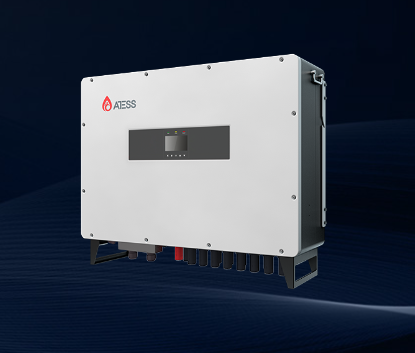
For commercial and industrial facilities seeking greater control over energy usage, the all-in-one hybrid inverter has become a practical cornerstone of modern solar installations. These systems integrate photovoltaic conversion, battery management, and grid interaction into a single unit, simplifying energy architecture while unlocking new levels of operational efficiency. Atess, a provider with 12+ years of experience in energy storage, manufactures a range of all-in-one hybrid inverters for solar that span from 5kW to 150kW, covering applications from small commercial setups to industrial-scale projects.

Core Technical Capabilities

A well-engineered hybrid inverter coordinates three power flows—solar generation, battery storage, and grid supply—to optimize energy use across shifting conditions. Atess products provide programmable modes such as peak shaving, backup, and self-consumption, allowing facilities to tailor operation to local electricity rate structures or reliability requirements. On the system integration side, the company’s hybrid inverters for solar support battery voltage ranges of 352V to 600V, with specific models like the HPS150 requiring 352-600V, ensuring proper pairing with compatible storage banks. When a grid fault occurs, these units automatically transfer to off-grid mode within 10 milliseconds, sustaining critical loads without disruption.

Application Flexibility and Protection

Beyond energy management, hybrid inverters for solar from Atess offer robust adaptability for diverse commercial settings. Installers can parallel up to ten units in off-grid configurations to scale capacity as demand grows, while a 1.5x PV over-configuration feature accommodates oversizing of solar arrays for greater generation potential. The HPS series also includes IP20-rated enclosures, providing protection against solid foreign objects in indoor installations without compromising thermal performance.

For businesses evaluating the transition to resilient solar-plus-storage, the hybrid inverter represents a consolidated alternative to separate grid-tie and battery systems. Atess delivers a full spectrum of hybrid inverters for solar, from 5kW to 150kW, with programmable logic, rapid grid disconnection, and scalable parallel operation—practical engineering that translates directly into operational savings and power continuity.

NewsProduct

Why Your Solar Batteries for Home Need Active PID Recovery

by businesshelps June 19, 2026
written by businesshelps

Growing adoption of residential energy storage has made solar batteries for home a key component of modern energy independence. As more households rely on photovoltaic systems and storage integration, long-term performance and energy yield stability have become critical concerns. Within this context, home battery systems must be designed not only for capacity and safety, but also for sustained efficiency over time.

Understanding PID Impact on Home Energy Systems

Potential Induced Degradation (PID) is a known issue in photovoltaic and storage-linked systems, where performance losses occur due to voltage stress and environmental factors. For solar batteries for home, PID effects can indirectly reduce overall system efficiency by lowering the energy available for storage and discharge cycles.

A well-integrated home battery system that includes active PID recovery helps mitigate these losses, ensuring that energy harvested from solar panels is effectively preserved and utilized. This improves long-term energy yield and system reliability.

Enhancing System Longevity Through Active Recovery

Active PID recovery technology works by continuously addressing performance degradation at the system level. In advanced solar batteries for home, this function helps stabilize energy output and maintain consistent charging efficiency.

For homeowners, a home battery equipped with this capability can better withstand environmental stress, voltage fluctuations, and long-term cycling impacts. This results in improved durability and more stable daily performance.

Modular Design Supporting Flexible Energy Expansion

Modern energy storage solutions are increasingly designed with scalability in mind. Modular solar batteries for home systems allow users to expand capacity as energy demands grow, without replacing existing infrastructure.

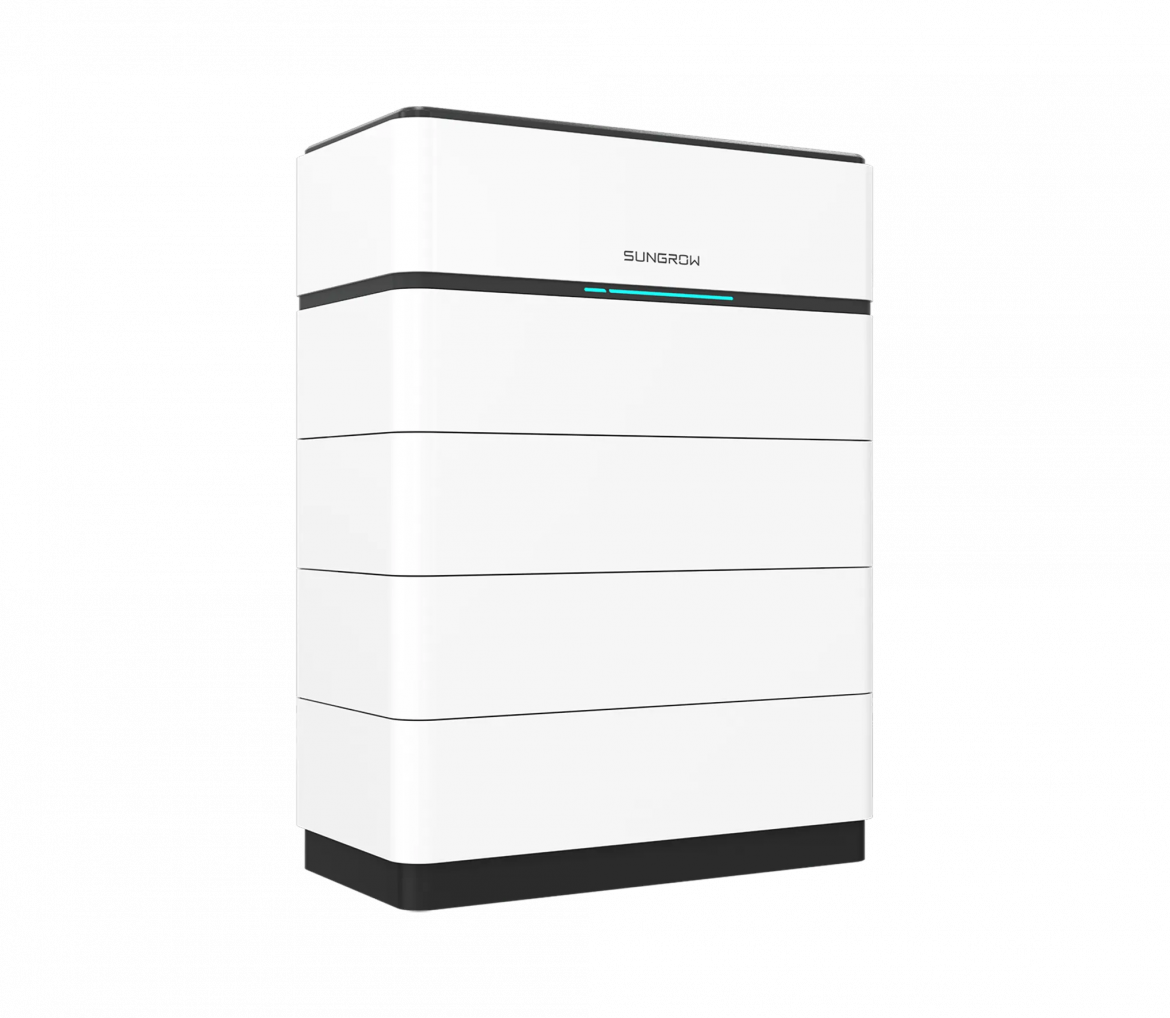
Sungrow offers a stackable residential energy storage solution ranging from 10–40kWh (SBH100–400). Each 5kWh module supports flexible configuration, allowing up to 8 modules per unit and 4 units in parallel, reaching up to 160kWh. With fast charging capability up to 50A, the system ensures strong daily performance while maintaining long-term stability. Integrated intelligently, this home battery solution supports both efficiency and expansion, making it suitable for evolving residential energy needs.

Building Smarter Residential Energy Reliability

As residential solar adoption increases, system-level performance optimization becomes essential. Active PID recovery ensures that solar batteries for home maintain higher efficiency over time, while modular architecture supports scalability and flexibility.

Through integrated design and advanced energy management, Sungrow’s residential solutions help deliver more reliable home battery performance, enabling households to maximize the value of their solar investments while maintaining long-term energy stability.

NewsProduct

 Why Mechanical Fastening Solutions Still Matter in Conveyor Maintenance

by businesshelps June 18, 2026
written by businesshelps

Reliable maintenance strategies are essential for facilities that depend on continuous material transport. While various methods exist for joining conveyor belts, mechanical options remain a practical preference for many industrial applications. By prioritizing durability and ease of repair, operations can maintain consistent uptime without needing complex equipment or extended shutdown periods.

The Value of Mechanical Connection

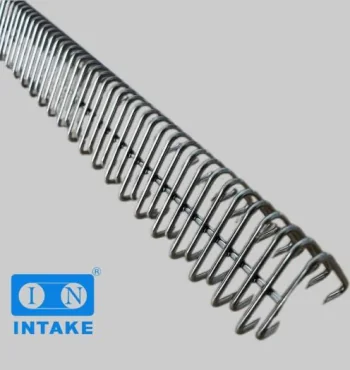
When a facility requires a belt fastener manufacturer to support its daily operations, the focus is often on speed and accessibility. Mechanical joints offer a distinct advantage: they can be installed or replaced without specialized vulcanization tools, which reduces the time labor crews spend on maintenance. Professionals find that these systems allow for rapid repairs on-site. Intake provides components engineered to hold securely under tension, ensuring that the integrity of the conveyor line is maintained through reliable mechanical hardware.

Supporting Diverse Operational Needs

Modern production environments often require versatility, and reputable mechanical fasteners manufacturers provide solutions that adapt to various belt thicknesses and material types. Because these fasteners are designed for specific industrial demands, they offer a consistent way to secure belt ends in challenging environments. The ability to quickly replace a damaged section helps keep costs predictable. When teams rely on consistent mechanical fasteners manufacturers to supply their hardware, they ensure that the equipment is ready to perform without extensive preparation.

Durability and Maintenance Efficiency

Effective maintenance involves minimizing the effort required to keep machinery functioning at capacity. Regular inspections help identify when a belt fastener manufacturer has provided hardware that is approaching the end of its functional life, allowing for preventative replacement. By utilizing well-designed solutions from Intake, maintenance personnel can perform these tasks efficiently. Using durable mechanical fasteners manufacturers results in fewer interruptions, as the joints withstand the daily wear of moving bulk materials across various industrial sectors.

Sustaining Consistent Performance

Practical approaches to conveyor maintenance highlight the necessity of having robust, easily accessible joining systems. By focusing on high-quality hardware and simplified installation, facilities ensure that their conveyor lines remain functional and productive. Reliable connections support a stable workflow, providing the foundation for efficient industrial performance.

NewsProduct

AMRs in US Automotive Dealer Service Centers: What 136 T300 Robots Across 4S-Style Stores Tell Buyers

by businesshelps May 28, 2026
written by businesshelps

Why dealer service centers in the US are now treating runner replacement as a calculable ROI play, with deployment patterns from over 130 units in active service.

May 26, 2026 | About 11 minutes read

Dealer service centers do not get the automation headlines that gigafactories and 3PL warehouses do. They are not greenfield. They are not high-bay. They are not running 24/7 lights-out operations. They look, on the floor, more like a busy specialist repair shop than a logistics hub. A parts warehouse at one end. A row of repair bays along the other side. A counter. A handful of technicians. A runner trotting back and forth carrying parts. That is the actual operational picture, and it has stayed roughly the same for thirty years.

It is also, quietly, where one of the more sober AMR deployment stories in North America is unfolding. Since 2025, 136 PUDU T300 industrial autonomous mobile robots have been activated cumulatively across US automotive dealer service centers, covering scenarios similar to those at domestic brand service points, European premium brand service centers, Japanese OEM dealers, and large multi-franchise dealer-group repair facilities. The pattern across sites looks almost identical: one short loop, parts warehouse to repair bay, a high-frequency task list, and an ROI calculation that finally pencils out at the store level.

That last point is the one worth taking seriously. Dealer service-center automation is no longer an experiment. It is becoming an operating-cost decision.

Why dealer service centers are quietly entering the AMR conversation

Two things changed at the same time. First, the International Federation of Robotics’ 2024 World Robotics report confirmed continued growth in mobile robot installations across service and light-industrial environments, even as some heavy industrial categories cooled. Service robots and industrial AMRs are no longer niche; the install base in the US is wide enough that integrators, parts suppliers, and dealer groups can talk about deployment patterns instead of pilots.

Second, the labor side of the dealer service workflow stopped working at the margin. US dealer associations have been documenting service-technician shortages and rising labor cost for several consecutive reporting periods, and the runner role, the entry-level technician or porter who shuttles parts between the warehouse and the repair bays, became progressively harder to staff. Runner turnover is high. Saturday and evening coverage is patchy. Technicians who could be billing labor hours are instead walking to the counter or back to the parts cage.

Most articles framing this trend jump straight to a turnkey service-center automation platform. In practice, that is the project most likely to stall. Dealer service-center layouts vary by brand, by franchise group, and by building age, and they reconfigure when service lines are added or rebalanced. A multi-million-dollar fleet planned against one floor plan does not survive contact with the next renovation. The 136-unit US deployment base is interesting precisely because it does the opposite. It deploys one or two robots at a time, into one short loop, and replicates the same loop across additional sites once it is validated.

The deployment pattern: parts warehouse to repair bay, one short loop

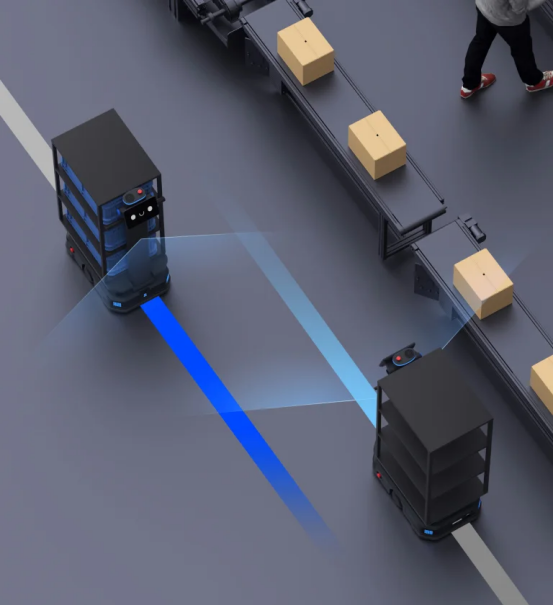
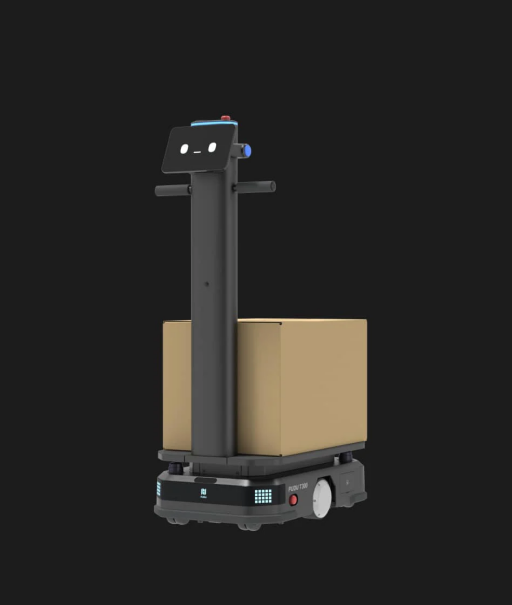
Figure 1. Industrial AMR moving a parts shelf along a defined route, the workflow pattern used in the dealer service-center parts delivery loop.

The deployment shape is unusually consistent across the US dealer service-center sites. An API dispatches a lifting task. A PUDU T300 industrial autonomous mobile robot picks up a parts rack from the lifting station at the parts warehouse entrance, drives to the requested repair bay, lowers the rack alongside the technician, and returns when the bay is done with the shelf. The repair order itself does not change. The counter does not change. The bay layout does not change. The robot replaces the walk.

High-volume stores handle at least 50 to 100 of these delivery tasks per shift, with peak days reaching about 150 tasks. That is the part of the deployment pattern that buyers tend to underestimate: the task volume per site is large enough that one or two robots quickly become essential, rather than nice to have, once the loop is validated.

Two additional outcomes show up consistently. Technicians stop interrupting their work to walk to the counter or the parts cage, which keeps the repair cadence continuous instead of pulse-and-pause. And the paper sign-off slip, the small operational artifact that quietly absorbs minutes per task and creates audit gaps, gets replaced by a traceable digital task record at the parts, location, and delivery level. Operationally, that is the closure of a long-standing back-office loop.

The runner ROI math that finally pencils out

The ROI conversation at dealer service centers used to be hand-wavy. It now has numbers that survive a controller review. In US dealer service centers in the active deployment base, the loaded labor cost of one runner is approximately USD 4,000 per month. The comprehensive monthly cost of one T300, including the unit, integration, and ongoing service, is approximately USD 2,500. A high-volume single store running 50 to 100 delivery tasks per day, sometimes peaking at 150, absorbs at least one runner full time. At that volume the spread is straightforward: one robot, one operating-cost line item, lower than one runner, with predictable availability across nights and Saturdays.

The Saturday gap is the part that often closes the decision. Runners are hardest to staff on Saturdays, exactly when many dealer service centers see one of the busiest service days of the week. When a runner is not on duty, technicians collect their own parts. That collapses repair-order throughput on the day that throughput matters most. An AMR that does not call in sick on Saturday is, by a quiet but real margin, the more reliable option.

Two caveats keep this honest. The math depends on volume; at fewer than 30 to 50 tasks per day, a robot is harder to justify than a part-time runner. And the math assumes the service center is open to digitizing the parts-pick-and-sign-off workflow at the same time. Stores that keep the paper trail and add a robot on top usually find that the robot saves walking time but does not close the back-office loop, which is where a meaningful share of the operational benefit lives.

Four operational features of dealer service centers that shape robot selection

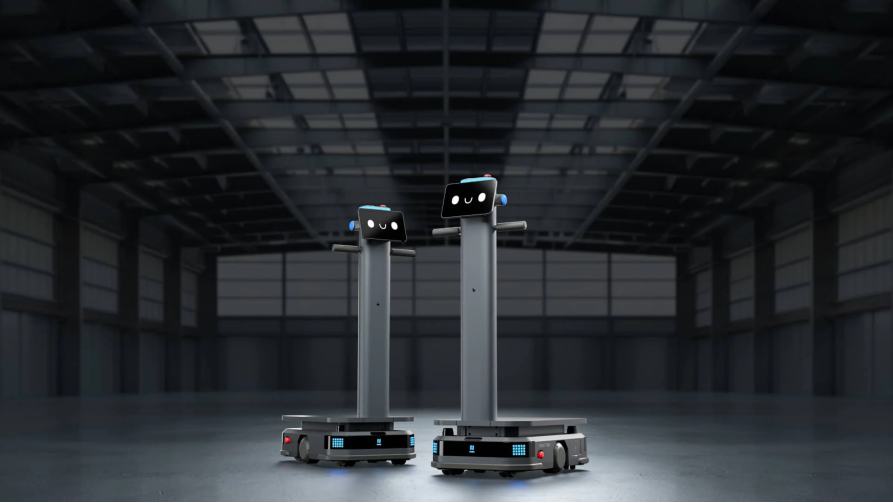
Figure 2. Compact-footprint industrial AMR sharing service-center aisles with technicians and equipment.

Pudu Robotics field engineering has now installed 136 T300 units across the US dealer service-center base, with new activations continuing through 2025 and into 2026. Four patterns repeat across nearly every site, and each one changes the calculus for what kind of AMR fits.

1. Layouts are similar across brands

The visible difference between a domestic-brand 4S point and a European premium brand service center is mostly signage. Operationally, the parts warehouse, the counter, the bay row, and the route between them are surprisingly similar. That is why a validated single-site deployment replicates so cleanly: the agent or integrator can re-use the same workflow design, the same fleet management settings, and the same training script across additional sites in the same dealer group.

2. Aisles are tight, mixed-traffic, and dynamic

A dealer service-center floor is not a warehouse aisle. It shares space with technicians walking, tool carts being pushed, parts boxes being staged, customer-facing service writers crossing through, and the occasional car being moved from a bay. Clearances are tight on paper and often tighter in practice. Compact footprint, omnidirectional perception including low and suspended obstacle detection, and tight-corner navigation are entry criteria. A robot that needs 1.2 meters of clear path simply does not run in a real service center.

3. The integration interface is an API plus a parts system, not a custom MES

Dealer service centers run on a dealership management system and a parts catalog, not on a custom factory MES. The integration pattern that works is an API call from the parts system or the dispatcher to the robot fleet, triggering a lifting task. That keeps the deployment cost low and the integration scope tight. It also means the vendor needs an API and fleet management that an integrator can wire up in days, not weeks.

4. Replication across sites is the value, not single-site excellence

Dealer groups buy in batches. Once a workflow is validated at one site, the procurement question is not whether to buy a second robot, it is how quickly the same model can be rolled into 5, 10, or 20 additional sites. The 136-unit US deployment base reached its current scale precisely because the replication step is low-friction. That is the practical lesson for procurement leaders: pick a deployment pattern that replicates cheaply, not one that is over-engineered for any single store.

Workflows in a dealer service center that fit a low-payload industrial AMR

Once you accept that the entry point is one short loop, the next question is which loop. The matrix below summarizes the workflows where a 300 kg-class low-profile industrial robot fits cleanly inside a dealer service-center environment, based on the deployment taxonomy used by the field engineering team across the active US sites.

WorkflowTypical loadFit for a 300 kg-class low-profile AMRWhy
Parts warehouse to repair bay delivery (the canonical loop)Parts on a shelf or rack, 20-200 kgStrongStandardized, recurring, high-frequency, route stable across shifts.
Empty shelf or fixture return from bay to parts warehouseEmpty rack, 5-40 kgStrongCombines naturally with the delivery loop into a closed cycle.
Lubricant or consumable replenishment to baysCases / drums in fixed sizes, 20-150 kgGoodPredictable timing, standardized containers; the workflow pays back when added on top of the parts loop.
Tire transport between tire storage and baysTires / tire stacks, 50-200 kgProject-dependentWorkflow pattern fits, but storage geometry varies by site; validate per location.
Vehicle movement between bays or to wash bayFull vehicle, 1000+ kgOut of scopeUse a vehicle-moving tug or dedicated equipment.
Customer-facing pickup or delivery to loungeSmall items, mixedOut of scopeCustomer experience workflows are better served by a customer-facing service robot product line.

Table 1. Workflow-fit matrix for a low-payload industrial AMR in a dealer service center.

The first three rows are the natural entry workflows. They share the four properties that make them safe first projects in a dealer service center: predictable load sizes, standardized handoff points, repeatable timing, and a sales-and-operations narrative that the service director can explain to the GM in one sentence. The 136-unit US deployment base lands directly in those rows.

What the T300 contributes operationally

Figure 3. Industrial AMR using a jacking lift to transfer a parts rack, the same mechanism used in the dealer service-center delivery loop.

The PUDU T300 is built for exactly the constraints described above: a 300 kg payload class with a low profile, flexible VSLAM positioning that does not require magnetic tape or reflectors, omnidirectional perception including low and suspended obstacle detection, around 60 cm path clearance, an ISO 3691-4 conformant safety design, and 24/7 operation. None of those are individually unique. What matters is that the combination matches the floor a dealer service center actually has, not the floor an idealized fleet plan assumes.

In the parts delivery loop, the operationally interesting capability is the in-place jacking lift. The robot does not need a dedicated docking station, conveyor handoff, or chute. It positions under a staged parts rack at the warehouse entrance, lifts, drives the validated route, lowers at the repair bay, and reverses for the empty-rack return. The service center keeps using the same racks and the same staging points. That is what keeps the integration cost low enough for the per-store ROI to actually pencil out, and what keeps the replication across additional sites fast.

Where Pudu Robotics fits in the global industrial AMR landscape

Dealer-group procurement teams reasonably want to know who they are buying from before signing a multi-site rollout plan. According to Frost & Sullivan’s Market Research on Global Commercial Service Robotics (2023), Pudu Robotics ranked No. 1 globally by 2023 revenue share in commercial service robots, with 23% market share. KEENON Robotics held 11%, Gausium 8%. For a dealer-group buyer, that signal matters less as a brag and more as a deployment-base signal: the vendor has the install base to harden product, the service depth to support multi-site operations, and the engineering capacity to keep iterating on workflows that smaller vendors cannot sustain.

Inside that portfolio, the T-series industrial robots are the entry point for service and light-industrial environments rather than hospitality or retail, which keeps the conversation operationally focused: this is the side of the company that talks payload, clearance, ISO 3691-4, fleet management, and integrator-led multi-site rollout.

What dealer-group procurement teams should evaluate next

If the deployment pattern described in this article fits your service centers, the most useful next step is not an enterprise RFP for a service-automation platform. It is a single-store validation against the canonical loop, with a clear replication plan if the validation passes.

From there, four questions decide whether a low-profile industrial AMR like PUDU T300 belongs in the loop:

– What is the actual daily delivery task volume per store at the volume threshold (50-100 tasks for ROI, 150 at peak), not the planning assumption?

– Is the dealer ready to digitize the parts-pick-and-sign-off workflow at the same time, so the robot delivers both walking-time savings and back-office closure?

– How quickly can an additional store be added to the rollout (target measured in weeks, not months) once the first site is validated?

– What is the vendor’s US service footprint and integrator network for response time, spare parts, software updates, and across the dealer brands in scope?

The answers tend to resolve into a small first project per dealer group, not an enterprise platform purchase. That is the right shape for an industry where one validated loop replicates across many similar floors.

FAQ

How many delivery tasks per day make a robot the right call versus a runner?

Above roughly 50 daily tasks the math tips in favor of an industrial AMR; above 100 it stops being close. Below 30 a part-time runner usually still wins. Saturday coverage is a separate consideration, because runner availability collapses on the day that service centers are busiest.

Does this replace the runner role entirely?

In most active deployments it absorbs the high-frequency parts-shuttle work that the runner was doing, while the runner role itself is either eliminated through attrition or redeployed to higher-value customer-facing tasks (check-in, lounge, lot management). The decision is usually presented and budgeted as a labor-cost line replacement at the store level.

What does integration with the dealer’s parts system look like?

An API call from the dispatcher or parts system triggers a lifting task to the AMR fleet. There is no custom MES, no factory-grade controls layer, and no rebuild of the dealer management system. The integration scope is small enough that a US integrator can stand up the canonical loop at a single store in days, not weeks.

How quickly can we replicate across multiple stores?

Once one store is validated, additional sites within the same dealer group typically come on faster: the workflow is the same, the API integration template is the same, and the training script is the same. That replication speed is what produced the 136-unit US install base in roughly two activation years.

How should we evaluate vendors beyond the spec sheet?

Three checks separate viable vendors from optimistic ones: an on-site obstacle and clearance walkthrough at the worst-case bay row, a per-store integration estimate that names the API entry point on the parts system, and a US service-coverage plan covering response time, spare parts, and software updates across the geography of the stores you intend to roll out.

References & Further Reading

1. International Federation of Robotics. World Robotics 2024. https://ifr.org/

2. National Automobile Dealers Association (NADA). NADA Data: annual financial profile of America’s franchised new-vehicle dealerships. https://www.nada.org/nada/nada-data

3. Frost & Sullivan. Market Research on Global Commercial Service Robotics (2023). https://www.frostchina.com/en/content/insight/detail/66b96cfadce2a58aa58ac492

4. Pudu Robotics. PUDU T300 industrial autonomous mobile robot. https://www.pudurobotics.com/en/products/pudut300

5. Pudu Robotics. Smart manufacturing case study, multi-robot collaboration. https://www.pudurobotics.com/en/case-studies/pudu-tri-robot-battery

NewsProduct

 Scissor Lift Safety Checklist: Pre-Operation Inspection Guide for Construction Teams

by businesshelps May 20, 2026
written by businesshelps

Zoomlion Access serves customers that need access equipment for construction, infrastructure, warehousing, facility maintenance, industrial plants, and specialized outdoor work. For a practical pre-operation safety checklist for construction teams, Zoomlion Access provides useful official product data that helps buyers compare electric scissor lift, scissor lift supplier, electric powered scissor lift, and rough terrain scissor lift against real jobsite needs.

Inspection Items Before the First Lift

For site supervisors, practical evaluation focuses on shift-start inspection, batteries, guardrails, controls, tires, alarms, platform extension, and ground conditions. A buyer reviewing electric scissor lift needs to consider the real work environment, including training, inspection, terrain, capacity, power source, and maintenance access. The same buyer should evaluate scissor lift supplier through documentation, parts support, service response, and application fit. A machine that looks suitable by height alone can still create downtime if its reach, controls, gradeability, or limits do not fit the site. For buyers, this makes the topic useful for both procurement planning and daily operational control.

Indoor and Rough-Terrain Differences

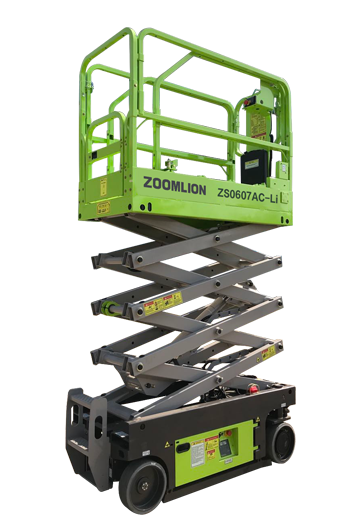
The ZS0607AC-Li is listed as an AC-Li Electric Scissor Lift. The official description says electric powered scissor lifts provide high efficiency and safe operation around jobsites, with work heights from 7.8m to 15.7m. The ZS0607AC-Li has a 7.8m/6.4m maximum working height, 230kg platform capacity, 0.91m platform extension, 0.76m overall width, 0.1m inside turning radius, 25% gradeability, 135Ah Li-ion. These details help explain how electric powered scissor lift and rough terrain scissor lift fit into the decision. Working height, outreach, capacity, turning radius, drive mode, power system, certification, and service access all influence project fit. electric powered scissor lift can be used as a specific machine function or product category, while rough terrain scissor lift can show the application, such as indoor access, rough terrain work, long-reach maintenance, or material handling. Using official values also helps the content stay rigorous while still giving readers enough detail to compare equipment options.

Checklist Discipline Reduces Jobsite Risk

Zoomlion Access can be presented as a reference brand because its official product information helps buyers compare electric scissor lift, scissor lift supplier, electric powered scissor lift, and rough terrain scissor lift with clear criteria. When project teams document requirements, inspect equipment, and select machines for the real application, Zoomlion Access can support safer operation, more predictable utilization, and a more disciplined procurement process. This approach also gives managers a clearer basis for training, maintenance scheduling, and future fleet investment.

NewsProduct

 How Electronic Shelf Labels Serve as the Core of Digital Retail

by businesshelps May 8, 2026
written by businesshelps

Retail digitization depends on connecting every physical shelf to the central data network. At the forefront of this connection stands the electronic shelf label (ESL) . These wireless devices replace paper tags with dynamic digital price tags that update instantly from a server. Beyond pricing, modern electronic shelf label (ESL) systems improve operational efficiency, reduce pricing errors, and cut labor costs. The Hanshow Nebular series represents the next generation of this technology, combining remote update capabilities with an ultra-sleek design that elevates store aesthetics. Understanding why the electronic shelf label (ESL) forms the heart of digital retail helps business buyers invest in the right infrastructure.

Remote Updates Drive Efficiency and Accuracy

A core function of any electronic shelf label (ESL) is the ability to refresh thousands of digital price tags from a centralized server. This eliminates the labor-intensive process of manually replacing paper labels. Staff hours once spent on tag changes can redirect to customer service or inventory management. Simultaneously, pricing errors drop to nearly zero, as shelf and checkout data remain perfectly synchronized. The Hanshow Nebular system executes these remote updates with speed and reliability, ensuring that every electronic shelf label (ESL) reflects the most current pricing and promotion information.

Sleek Appearance Enhances Shelf Aesthetics

Beyond operational benefits, digital price tags influence store appearance. Bulky or mismatched tags detract from product presentation. The Hanshow Nebular changes this dynamic with a sleek appearance measuring only 7.8mm thick. This ultra-thin profile allows each electronic shelf label (ESL) to blend seamlessly into any retail environment, from high-end fashion to grocery. Clean, uniform digital price tags create a professional, trustworthy shopping experience that reinforces brand quality. The Hanshow Nebular Proves that the electronic shelf label (ESL) can be both a functional tool and a design asset.

The Next Generation of Shelf Technology

The electronic shelf label (ESL) continues to evolve. Hanshow Nebular leads this evolution with advanced hardware that supports future retail applications. By adopting digital price tags from Hanshow, retailers gain a solution that reduces labor costs, eliminates pricing errors, and enhances store aesthetics—all from a device only 7.8mm thick. As the heart of digital retail, the electronic shelf label (ESL) powers smarter, more responsive stores.

Hanshow: Delivering the Core of Digital Retail

For retailers ready to place the electronic shelf label (ESL) at the center of their operations, Hanshow provides proven technology. The Hanshow Nebular series combines next-generation remote update capabilities with an ultra-sleek 7.8mm design. By choosing this company’s digital price tags, businesses achieve operational efficiency, pricing accuracy, and visual excellence—turning the electronic shelf label (ESL) into the true heart of digital retail.

NewsProduct

How to Replace a Torn Canopy on an Outdoor Soft-Top Gazebo

by businesshelps April 2, 2026
written by businesshelps

Outdoor soft-top gazebos are a practical addition to any backyard, providing shade and shelter for family gatherings or quiet relaxation. Over time, however, the canopy may become torn or worn due to exposure to wind, rain, or sun. Recognizing the signs of damage is important to maintain both the functionality and appearance of your SUNJOY soft-top gazebo. Small rips, frayed edges, or fabric thinning are indicators that the canopy may need replacement.

Preparing for Canopy Replacement

Before starting the replacement process, gather the necessary tools and materials. This typically includes a new SUNJOY canopy designed specifically for your gazebo model, a ladder for access, and basic hand tools such as wrenches or screwdrivers. It is also helpful to have a clean, flat workspace to lay out the torn canopy and organize components. Safety should be a priority, especially when working at height or handling frame components.

Removing the Old Canopy

Start by carefully detaching the old canopy from the gazebo frame. Most SUNJOY soft-top gazebos feature a simple attachment system, often using Velcro straps, clips, or hooks. Begin at one corner and work methodically around the structure to avoid tearing remaining parts of the fabric or bending the frame. Once the canopy is fully removed, inspect the frame for any damage or loose hardware. Repair or tighten any parts as needed before installing the new canopy.

Installing the New Canopy

To install the replacement canopy, unfold the fabric and position it over the gazebo frame. Align corners and edges carefully to ensure a snug fit. Attach the canopy using the same method as the original, securing all straps, hooks, or fasteners. It may be easier to start with one corner and move diagonally across the structure to maintain even tension. A properly installed soft-top canopy should fit securely without sagging, providing full coverage and maintaining the aesthetic appeal of your SUNJOY outdoor soft-top gazebo.

Maintaining Your Gazebo Canopy

Regular maintenance can extend the life of your soft-top gazebo canopy. Cleaning the fabric periodically with mild soap and water prevents dirt buildup and reduces the risk of damage. During storms or harsh weather conditions, consider temporarily removing the canopy or securing it to prevent tears. SUNJOY soft-top gazebos are designed for easy care, and following simple maintenance steps can keep your gazebo looking and performing its best for years.

Conclusion

Replacing a torn canopy on an outdoor soft-top gazebo is a straightforward process when you follow the right steps. Identifying damage early, removing the old canopy carefully, and installing a properly fitting replacement ensures that your gazebo continues to provide shade and comfort. SUNJOY offers a range of soft-top gazebos with durable, easy-to-replace canopies, making upkeep simple and efficient. With attention to proper installation and maintenance, your outdoor space can remain inviting and well-protected.

NewsProduct

What PETG Filament Is Good For in Everyday 3D Printing

by businesshelps March 30, 2026
written by businesshelps

3D printing hobbyists often wonder what is PETG filament good for when selecting materials for personal projects. Among available options, PETG offers a balance of durability and ease of use, making it a practical choice beyond decorative printing. As a versatile material, PETG filament works well for everyday printing needs, providing toughness without requiring complex settings. Its flexibility allows hobbyists to create functional items with confidence, from household gadgets to customized accessories. PETG is particularly appealing to makers seeking reliable prints that can handle daily wear and tear.

Durable Material for Functional Parts

One of the main advantages of filament PETG is its toughness. PETG has higher impact resistance and greater flexibility compared with standard PLA, helping printed objects withstand repeated use without cracking. This makes it ideal for practical items like custom organizers, holders, or mechanical components. Its resilience ensures that small tools, toys, or kitchen gadgets maintain integrity even under regular handling. The combination of strength and ease of printing makes PETG suitable for makers who want both performance and convenience.

Thermal and Chemical Resistance Benefits

Another reason PETG is favored in personal projects is its resistance to moderate heat and chemicals. Petg filament performs well in conditions that might warp or damage other materials, such as warm rooms or exposure to cleaning agents. Electronics enclosures, car interior accessories, or outdoor items benefit from this thermal stability and chemical resistance. PETG’s strong layer adhesion and lower tendency to warp make it a dependable choice for items that require durability and consistent quality over time.

How CaiLab PETG Supports Everyday Projects

For hobbyists seeking smooth and reliable printing, they often choose CaiLab PETG filament. The material is designed to extrude consistently, minimizing common printing problems like clogging or uneven layers. Available in convenient spool sizes, it works with most consumer FDM printers, enabling users to produce a wide range of personal items. From functional household objects to creative DIY designs, CaiLab PETG supports projects that require both toughness and ease of use, making it a versatile option for individuals exploring 3D printing.

Conclusion: PETG Filament for Practical Printing

In conclusion, understanding what PETG filament is good for helps hobbyists select materials suited to real-world applications. PETG excels in creating durable parts, heat- and chemical-resistant items, and reliable everyday objects. With CaiLab PETG filament, individuals can achieve consistent, high-quality results for household accessories, mechanical components, or outdoor items. Its combination of flexibility, toughness, and printability makes it a practical choice for personal 3D printing projects, offering both functionality and convenience.

Recent Posts

  • Understanding the Anatomy of Quality Dental Chair Units
  • Key Features and Benefits of Hybrid Inverters for Solar
  • Alternatives to Virco and Artcobell for International Bulk School Furniture Buyers
  • Enhancing Backbone Networks with Liobate Technologies
  • Why Your Solar Batteries for Home Need Active PID Recovery

Rencent Comments

No comments to show.

About Me

About Me

Designer

Sed ut perspiciatis unde omnis iste natus sit voluptatem accusantium dolor emque.

Keep in touch

Facebook Twitter Instagram Pinterest Behance Youtube

Popular Posts

  • 1

    Guide to the Onboarding Process in Mobile Apps

  • 2

    為何廣汽埃安ES特別適合香港城市駕駛需求

  • 3

    Aion Auto的智能駕駛解決方案 埃安V L2級駕控解析

  • 4

    Mega Navigation Menu Design Trends in Modern Websites

  • 5

    The New Rules for Scrolling in Web Design

  • 6

    What in the World Are Microinteractions?

Categories

  • App Design (6)
  • Architecture (1)
  • Automobile (1)
  • Biology (2)
  • Business (81)
  • Desgin (3)
  • Dress (1)
  • Economy (25)
  • Furniture (1)
  • Global Trade (32)
  • Healthcare (1)
  • Industry (91)
  • Innovation (42)
  • Jewelry (4)
  • Machine (1)
  • Manufacturer (17)
  • Market (29)
  • Medical (12)
  • News (47)
  • Product (8)
  • Tech (47)
  • Technology (12)
  • UI/UX (7)
  • Web Design (7)
  • Facebook
  • Twitter
  • Instagram
  • Pinterest
  • Behance
  • Youtube
  • Bloglovin
businesshelps
  • Home
  • UI/UX
  • Web Design
  • App Design