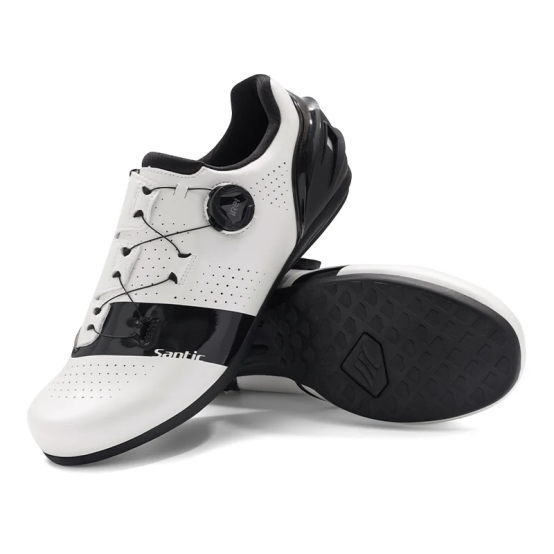
Many riders begin comparing footwear only after they feel unsure at traffic lights, uncomfortable while walking, or inefficient during longer efforts. The choice between lock–free cycling shoes and traditional clip-in shoes is not a simple beginner-versus-expert question. It is a decision about pedal style, confidence, terrain, walking needs, and how much connection the rider wants between shoe and bike.
Santic’s lock-free cycling shoe collection is relevant for riders who want a cycling-specific feel without attaching the shoe mechanically to the pedal. These shoes can suit commuters, indoor riders, recreational road cyclists, and people who prefer quick foot release. Traditional clip-in shoes remain valuable, but their strengths appear under different riding conditions.
The comparison becomes clearer when the rider imagines an ordinary week. There may be short errands, fitness rides, coffee stops, indoor sessions, and one longer weekend route. Shoes that perform well in only one situation may be excellent for specialists, but they can feel limiting for riders whose cycling life changes day by day.
How Lock-Free Designs Change Daily Riding
Lock–free cycling shoes usually use a grippy rubber outsole, a supportive midsole, and an upper shaped for pedaling comfort. They let the rider step off the bike naturally, walk into a shop, carry the bike upstairs, or place a foot down quickly in traffic. That freedom can make urban riding calmer and more predictable. Unlike casual sneakers, good lock-free cycling shoes still need structure.
If the sole bends too much, pedaling can feel soft and inefficient. If the outsole lacks grip, the foot may move on the pedal during wet starts or rough pavement. The best designs sit between street comfort and cycling stability. For new cyclists, the mental benefit can be just as important as the physical one. A rider who is worried about unclipping may brake early, hesitate in crowds, or avoid busy routes.
Lock-free footwear can ease that specific anxiety while still giving the foot a more suitable platform than ordinary shoes. Pedal surface should be considered together with the shoe. A flat pedal with good pins or texture can make lock-free cycling shoes feel planted, while a smooth platform can reduce confidence. The same shoe may therefore feel very different on two bicycles, which is why the pedal-shoe combination matters more than either item alone.
Where Traditional Clip-In Shoes Still Make Sense
Traditional clip-in shoes create a fixed connection with compatible pedals. When cleat position is correct, the foot stays in a consistent place through every stroke. Riders who train at high cadence, sprint, climb out of the saddle, or ride in fast groups often appreciate that direct and repeatable connection. The drawback is that clip-in systems require setup.
Cleat angle, fore-aft position, release tension, and shoe fit all influence comfort and knee tracking. A poorly adjusted traditional shoe can cause hot spots or joint irritation, while a properly fitted one can feel efficient and secure during demanding sessions. Walking is the other major distinction. Road cleats can be slippery on smooth floors and awkward on stairs.
Some mountain or gravel clip-in shoes use recessed cleats to improve walkability, but they still involve mechanical engagement. Riders should be honest about how often they step off the bike during a normal ride. A comparison chart should therefore include release speed, walking comfort, pedal efficiency, grip, learning curve, weather behavior, and maintenance. Lock-free cycling shoes score strongly for convenience and confidence.
Traditional options score strongly for maximum connection and repeated power transfer. Maintenance also separates the two categories. Lock-free models avoid cleat bolts, release tension, and worn cleat replacement, while traditional systems require occasional inspection. That maintenance is not difficult, but it adds responsibility. Riders who travel with their bike or switch shoes frequently should include that practical detail in the decision.
Choosing the Shoe That Fits the Real Route
Santic can be positioned as a helpful reference because its cycling footwear spans different riding patterns. A commuter riding short city distances may gain more from lock-free cycling shoes than from a race-style setup. A rider preparing for structured road training may eventually prefer clip-in shoes once handling skills feel natural. Indoor cycling also deserves attention.
Some riders want footwear that works on a home bike, gym floor, and short outdoor ride without changing pedal systems. Lock-free models can be practical in that mixed setting, provided the pedal surface gives enough traction under sweat and repeated effort. A careful buyer can test walking, mounting, braking, and short accelerations before making the final choice.
If the shoe supports confident handling in the environments actually used, it is doing its job. Lock-free cycling shoes and traditional shoes both have value when the rider chooses with honest riding habits in mind. This practical comparison helps riders avoid paying for performance features that do not match their daily routes. No comparison should pretend that one format wins every situation.
The smarter answer begins with the rider’s route, confidence, walking needs, and performance goals. When shoes match those realities, cycling becomes safer and more efficient. Lock-free footwear is not a compromise for everyone; for many riders, it is the most logical way to keep control without giving up cycling-specific support.