Every hardware team eventually learns the same lesson: the processor that anchors a product today will not be sold forever. What separates manufacturers who handle that transition smoothly from those who scramble is not luck, it is a deliberate strategy built into the platform decision from the very beginning.
Choosing a flexible computing architecture with long-term support can help reduce redesign risks and maintain product continuity throughout the development lifecycle. For industrial applications that require stable performance over years of deployment, selecting the right embedded platform becomes a critical factor in achieving sustainable product success.
Strategy One: Choose a Processor Platform with a Public Roadmap
The first and most overlooked strategy is checking whether the underlying silicon vendor publishes a committed production timeline rather than simply advertising current performance. A processor backed by a documented multi-year roadmap gives manufacturers a planning horizon, while one without any stated commitment leaves the entire product exposed to a surprise discontinuation.
This distinction matters more for industrial products than consumer electronics. A System on Module built around a processor with a known end-of-production date can be planned around deliberately, with a successor evaluation scheduled years in advance rather than triggered reactively once an unexpected notice arrives.
Strategy Two: Prioritize Modules Built for Long Lifecycle Packaging
Package type quietly determines how stable a module remains over years of production. Modules using soldered LGA packaging, such as Vantron’s VOSM700 built on the MediaTek Genio platform, are engineered specifically for sustained industrial production runs rather than the frequent revisions typical of consumer-grade sockets.
A long lifecycle System on Module built this way also tends to carry a wider operating temperature rating as a byproduct of its industrial design intent. The VOSM700, for example, operates from -40°C to +85°C, reflecting an engineering philosophy aimed at multi-year field deployment rather than short consumer replacement cycles.
Strategy Three: Build Carrier Boards That Can Accept a Successor Module
Even the best processor roadmap eventually reaches its end, which is why the carrier board itself deserves lifecycle planning. Designing around a standardized connector, whether SMARC, OSM, or COM Express, keeps the door open for a pin-compatible successor module to slot into an existing carrier board without a full redesign.
This strategy pays off most clearly for manufacturers operating across ARM and x86 product lines simultaneously. Vantron’s VT-COME-BASIC-E2176, a COM Express Compact Type 6 module built on Intel Xeon E-series processors, follows the PICMG COMe R2.1 standard, giving manufacturers a documented upgrade path within the same connector standard as processor generations advance.
Strategy Four: Work with Suppliers Who Give Advance Notice, Not Surprises
No processor lasts forever, so the real differentiator between suppliers is how much warning they give before a transition occurs. A vendor who communicates end-of-life timelines a year or more in advance allows manufacturers to plan a successor evaluation calmly, rather than absorbing a compressed redesign under deadline pressure.
This kind of transparency is difficult to verify from a datasheet alone, which makes supplier track record an important part of due diligence. Manufacturers evaluating a System on Module platform should ask directly how past transitions were handled and how much lead time customers received before a previous generation was phased out.
Strategy Five: Treat Bill-of-Materials Stability as a Design Requirement
A module’s processor is only one part of its lifecycle exposure. Memory, storage, and power management components sourced alongside the processor also need long-term availability commitments, since a single unavailable supporting part can force a requalification just as disruptive as a processor change.
Manufacturers should review the supplier’s PCN, EOL, critical-component change, and lifecycle-notification policies, not just the headline processor, and confirm that the supplier manages sourcing continuity across every component rather than only the one advertised on the box.
How Vantron Builds These Strategies Into Its Module Portfolio
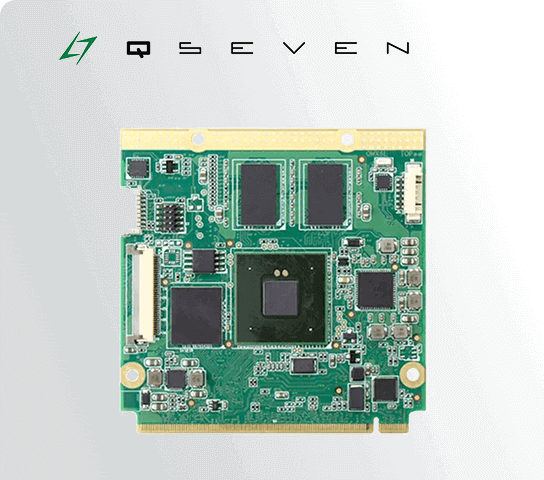
Vantron applies these principles directly across its System-on-Module lineup, spanning OSM, SMARC, Q-Seven, and COM Express form factors built on both ARM and x86 platforms. Modules such as the VOSM700 and VT-COME-BASIC-E2176 are selected specifically for their manufacturers’ committed production roadmaps, rather than chosen purely for peak performance at launch.
Standardized connectors reinforce this strategy further. Because Vantron’s modules follow established form factor specifications, customers can plan for a future successor module on the same carrier board rather than treating every processor transition as a full hardware redesign.
Direct engineering support closes the loop on long-term planning. Vantron’s FAE team works with customers well ahead of a processor transition, helping evaluate successor options and manage the migration path so that a long lifecycle System on Module platform delivers on its promise in practice, not just on a datasheet.
Long-term availability is never guaranteed by a single component choice. It comes from a combination of processor roadmap transparency, thoughtful packaging, standardized connectors, and a supplier willing to communicate early rather than after the fact. Manufacturers who treat these strategies as part of the original design decision, rather than an afterthought, are the ones who handle the next processor transition as a planned milestone instead of an emergency.