Industrial manufacturing environments introduce severe electrical hazards that demand strict adherence to statutory safety frameworks. Procurement teams evaluating hardware must look beyond raw performance metrics to verify compliance with international electrical codes.
Operating high-amperage systems safely requires baseline insulation, proper grounding, and robust operator protection protocols. Failing to secure certified infrastructure exposes facilities to catastrophic equipment damage and severe personnel risks.
Regulatory bodies mandate comprehensive safeguards surrounding primary and secondary power circuits within heavy production lines. National electrical safety codes dictate that any heavy-duty power regulation unit must incorporate isolated control circuits operating at low voltages to safeguard personnel.
Navigating High-Voltage Hazards and Statutory Electrical Codes
Protecting operators from high-voltage exposure requires systematic placement of lock-out mechanisms at main power disconnects. Engineering teams carry the responsibility of ensuring installations conform completely to regional statutory mandates. Facilities integrating automated joining cells encounter stringent requirements regarding enclosure integrity and electrical isolation.
Access panels housing high-voltage components must feature automated mechanical interlocks that instantly interrupt power upon opening. Such safety barriers prevent accidental contact with live internal buses during routine maintenance shifts. Component suppliers must provide clear electrical schematic documentation proving that internal live parts remain completely inaccessible to unauthorized personnel.
Thermal management constitutes a critical compliance dimension governed by industrial safety standards across global manufacturing sectors. High-duty-cycle operations generate substantial internal heat loads that can degrade solid-state switches and transformer windings.
Statutory guidelines dictate that heavy-duty power regulation modules must feature integrated thermal protection switches to prevent catastrophic overheating during continuous duty cycles.
Equipment lacking reliable thermal cutoff mechanisms risks unexpected failure, component burnout, and severe workplace safety violations.
Integrating Thermal Interlocks and Enclosure Protection Mechanisms
Operators working near high-current joining cells face potential hazards from intense electromagnetic fields and high-voltage transformer outputs. Safety standards mandate that surrounding workstations utilize robust physical shields and clearly marked perimeter warning labels.
Equipment designers must implement dual-channel emergency stop circuits capable of halting all pneumatic and electrical operations instantaneously.
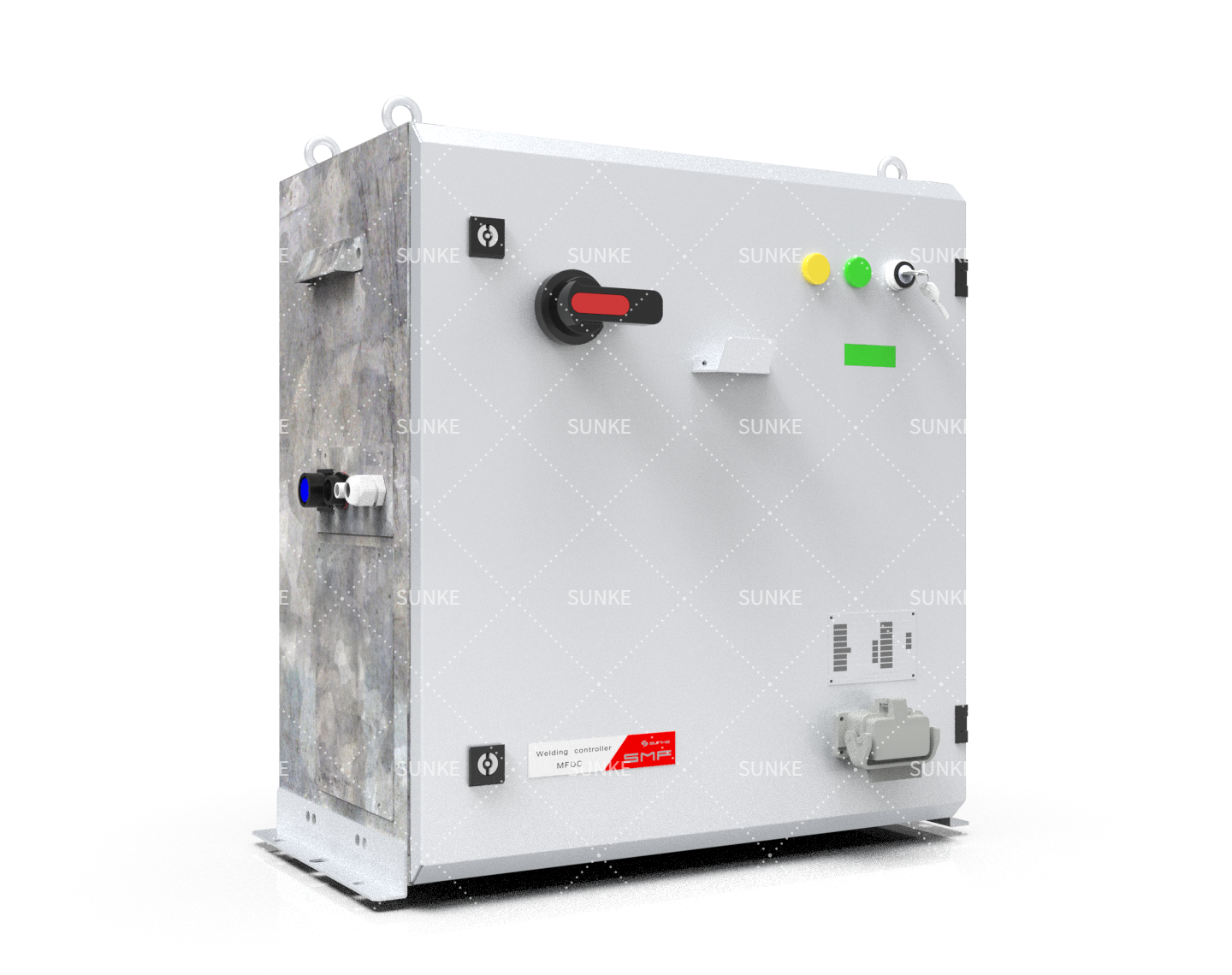
Integrating these protective measures ensures that unexpected machine anomalies never compromise shop-floor personnel safety. When evaluating a high-performance resistance welding controller, engineering teams must verify insulation ratings and short-circuit withstand capabilities. Manufacturers navigating complex regulatory landscapes often seek out established technology partners with proven compliance documentation.
To simplify compliance tracking, Sunke provides exhaustive technical dossiers alongside their hardware specifications. Their technical compliance protocols include comprehensive low-voltage testing and electromagnetic compatibility assessments. Procurement specialists gain confidence knowing that deployed hardware satisfies global industrial safety baselines without sacrificing operational throughput.
Equipment reliability directly correlates with the quality of internal safety components, isolation barriers, and protective circuitry architecture.
Auditing Vendor Certification Frameworks for Compliance Assurance
Component sourcing specialists must verify that candidate vendors utilize certified solid-state switching elements and UL-listed subassemblies. Inferior wiring practices or substandard insulation materials frequently lead to electrical short circuits and unexpected production downtime. Establishing strict pre-procurement component audits safeguards assembly lines against non-compliant hardware infiltration.
Maintenance crews depend upon intuitive diagnostic interfaces and clear fault-reporting mechanisms to resolve operational faults safely. Modern compliance guidelines encourage the inclusion of self-diagnostic software routines that alert technicians to impending hardware anomalies before failure occurs. Clear visual indicators and digital error logs allow maintenance teams to isolate electrical anomalies without exposing themselves to live hazards.
Suppliers must demonstrate secure access control for parameter modifications to prevent unauthorized configuration changes. Certified testing laboratories play a pivotal role in validating that industrial hardware withstands harsh operational stress and electrical surges. Vendors seeking market acceptance must submit their units to independent third-party evaluations covering dielectric strength and insulation resistance.
Reviewing these formal test reports gives plant managers objective proof of long-term durability and electrical safety compliance.
Enforcing Fail-Safe Communication and Fluid Isolation Protocols
Deploying an advanced resistance welding controller demands strict adherence to communication bus security and network fault-handling standards. Automated cells require seamless communication links with master programmable logic controllers while maintaining absolute isolation from external interference. Safety standards dictate that fieldbus communication failures must trigger safe state responses rather than unpredictable machine behavior.
Furthermore, they ensure that their embedded control algorithms incorporate multi-tier hardware redundancy and rapid fault-handling routines. Cooling circuits introduce specific fluid-handling safety considerations that require careful verification during system integration and setup. Engineers must prevent fluid splashing onto high-voltage electrical terminals during maintenance work or component replacement.
Sourcing guidelines mandate the use of non-conductive materials and secure quick-disconnect fittings equipped with automatic shutoff valves. Ensuring robust fluid isolation prevents dangerous short circuits and protects sensitive electronic control boards from moisture damage or corrosion. Comprehensive system testing ensures zero vulnerabilities exist prior to full production rollout.
Securing long-term operational excellence across demanding high-volume manufacturing facilities requires rigorous alignment with global safety directives. Procurement directors and plant engineers must maintain absolute vigilance when vetting supplier documentation and internal hardware architectures.
By prioritizing certified electrical insulation, robust thermal cutoffs, and fail-safe communication protocols, factories eliminate severe regulatory risks.
Ultimately, Sunke delivers dependable power regulation solutions that bridge the gap between high-speed joining performance and uncompromising workplace safety under demanding production conditions.
Collaborating with compliance-focused technology partners ensures that automated assembly lines remain fully protected against unexpected hazards throughout their operational lifecycles.