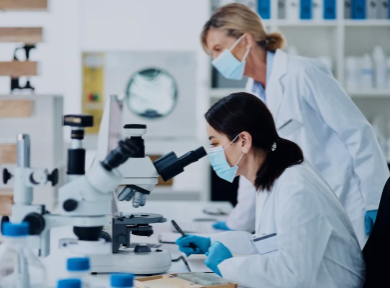
Contemporary pharmaceutical research depends heavily on strategic external collaborations to bridge the challenging gap between laboratory discovery and industrial-scale manufacturing. Complex biotherapeutic pipelines call for specialized technical expertise and high-standard production facilities. Cooperation with a certified biologics CMO enables drug developers to advance innovative therapeutic candidates through each clinical stage steadily while preserving molecular structural integrity. Facilities operated by Yaohai Bio-Pharma incorporate ISO-certified and EU QP-audited platforms designed to harmonize global regulatory requirements and support diverse molecular production requirements.
Core Principles of Microbial Expression Platforms and Host Strain Selection
Microbial platforms form the foundation of numerous modern manufacturing strategies, particularly for recombinant proteins, plasmids, and nucleic acid therapies. Choosing the appropriate expression host dictates overall product yield, folding accuracy, and structural stability. Bacterial and yeast systems require specialized genetic modification techniques to optimize protein expression and metabolic stability. Comprehensive host screening protocols allow developers to identify the most compatible expression system for specific molecular architectures early in the project lifecycle.
Fermentation parameters demand precise control to prevent inclusion body formation and maximize soluble protein recovery. Bioreactor scaling requires careful management of oxygen transfer rates, nutrient feeding strategies, and temperature profiles. Experienced contract manufacturing organizations utilize advanced monitoring tools to maintain consistent environmental conditions throughout industrial fermentation runs. Such meticulous oversight minimizes batch-to-batch variation and establishes a solid foundation for subsequent purification stages.
Purification Train Design – Optimizing Step Transitions for Maximum Recovery
A well‑designed purification train sequences each chromatography and filtration step in logical order, ensuring that each unit operation prepares the product stream optimally for the next. The selection and ordering of capture, intermediate, and polishing steps must consider not only individual step performance but also the cumulative impact on yield, purity, and processing time. Effective transition design between steps—including adjustments to pH, conductivity, and protein concentration—minimizes product loss and reduces the need for intermediate hold steps that could compromise stability. Suppliers that demonstrate thoughtful purification train architecture, supported by mass balance data across all steps, offer greater assurance of consistent product recovery.
Equally important is the integration of in‑process controls at each transition point to verify that the product stream meets defined quality attributes before proceeding to the next step. Real‑time monitoring of key parameters such as UV absorbance, conductivity, and pressure enables rapid detection of column performance issues or filter fouling, allowing timely intervention. Comprehensive documentation of step‑to‑step mass balances and impurity clearance factors provides the data needed for regulatory submissions and process troubleshooting.
Streamlined Regulatory Roadmaps for Worldwide Biotherapeutic Approval
Biotech developers encounter disjointed regional supervision rules when submitting products for global commercial clearance. Production service providers must meet unified cGMP requirements acknowledged by top global drug regulatory bodies. Sustained internal and third-party audits alongside standardized file recording validate that all production steps comply with global pharmacopoeial specifications. Fully traceable data logs track each batch’s full lifecycle starting from incoming raw supplies through finished biomaterial release.
Yaohai Bio-Pharma builds an integrated quality system covering equipment validation workflows, standardized staff GMP training and continuous cleanroom environmental surveillance. In-house autonomous QA units analyze all process non-conformities and deploy targeted rectification solutions promptly. Extensive audit experience helps facilitate regulatory reviews and improve submission readiness for CMC registration documents. This mature compliance architecture safeguards end patient safety and removes barriers for cross-border market expansion of novel biologics.
Exclusive Custody & Full-Traceability Mechanisms for Client IP and Authentic Bioprocess Data
Yaohai Bio-Pharma avoids common confidentiality risks from shared production and network systems by deploying exclusive offline workstations and separated storage spaces for each client’s strains, vectors and confidential process data. All testing and fermentation records generate permanent uneditable audit trails, while tailor-made non-disclosure agreements fully confirm clients’ sole ownership of all intellectual assets, complying with global regulatory data integrity rules.
A unified full-lifecycle tracking system monitors every biological sample and digital file throughout manufacturing. Constant temperature cell bank warehouses with emergency power backup secure proprietary biomaterials round the clock. This closed security system reduces IP leakage risks and delivers complete, credible documentation ready for cross-border regulatory submissions.
Modular Facility Design and Future-Ready Capacity Expansion
The production facility’s ability to accommodate evolving product portfolios and demand fluctuations determines its long‑term value as a manufacturing partner. A modular facility design, with discrete processing suites that can be reconfigured or expanded independently, offers the agility to support both small‑scale clinical batches and large‑scale commercial campaigns without mutual interference. This architectural approach enables parallel processing of multiple projects within the same footprint, while dedicated HVAC and utility zones for each module prevent cross‑contamination and simplify changeover procedures. For developers with programs advancing through clinical stages, such configurability translates directly into reduced lead times and lower capital risks.
Beyond immediate production needs, a forward‑looking facility infrastructure anticipates future capacity requirements through built‑in expansion nodes and utility oversizing. Pre‑installed service connections, spare equipment bays, and expandable cleanroom shells allow rapid scaling without disruptive shutdowns or costly retrofits. This strategic foresight protects clients from supply bottlenecks during commercial launch phases, when demand often outpaces initial projections. Yaohai Bio‑Pharma exemplifies this future‑ready philosophy, with its facility designed to support incremental capacity additions and new modality introductions, helping ensure client programs can continue scaling with manufacturing needs.
Professional Analytical Development and Product Characterization Systems
Analytical testing protocols must evolve concurrently with manufacturing process improvements to ensure comprehensive product characterization. Method development teams design stability-indicating assays that evaluate degradation pathways under various environmental stress conditions. Validation studies confirm the accuracy, precision, and linearity of analytical methods prior to clinical trial material release. Detailed characterization data provides critical insights into higher-order molecular structures.
Reference standard characterization establishes a benchmark for routine lot-release testing throughout the product lifecycle. Stability testing protocols monitor physical and chemical attributes over extended storage durations to determine shelf-life expiration dates. Collaborative analytical teams work closely with clients to resolve unexpected impurities or assay discrepancies swiftly. Comprehensive analytical support provides greater confidence in therapeutic safety and efficacy profiles.
Knowledge Transfer and Process Deepening – Beyond Batch Delivery
Technology transfer represents a knowledge-sharing journey rather than a one-time document handover between sending and receiving units. The receiving team must absorb not only the written protocols but also the tacit understanding of process nuances, including subtle fermentation behaviors and chromatography response patterns observed during development. This deeper assimilation occurs through joint execution of engineering runs, where both parties observe equipment-specific performance variations and adjust parameters collaboratively. Such hands-on engagement transforms the transfer exercise into a mutual learning opportunity, ultimately strengthening the final manufacturing process.
A successful transfer also enables process improvement by leveraging the receiving facility’s unique equipment capabilities and operational insights. The recipient team may suggest alternative column packing techniques or modified filtration sequences that enhance yield without compromising product quality, based on their experience with analogous molecules. This bidirectional knowledge flow, supported by systematic capture of lessons learned and periodic post-transfer reviews, creates a continuously improving manufacturing platform. Yaohai Bio-Pharma embeds this collaborative philosophy into every technology transfer project, ensuring that client programs emerge from the process with enhanced robustness and deeper process understanding, ready for commercial success.
Full Lifecycle Support Capabilities for Biologic Development and Production
Biopharmaceutical development extends far beyond initial clinical manufacturing into commercial distribution and marketing authorization support. Comprehensive contract partners offer integrated solutions encompassing chemistry, manufacturing, and controls documentation alongside regulatory filing assistance. End-to-end service models reduce administrative burdens by eliminating the need to coordinate multiple disparate vendors. Long-term strategic partnerships foster continuous process improvement and supply chain resilience.
Solid fill-finish execution and stable cold chain logistics underpin full commercial launch readiness for biotech products. Facilities must support aseptic processing under strict environmental monitoring controls to guarantee sterility assurance. Partnering with organizations capable of managing commercial distribution simplifies global market entry for emerging biotherapeutic products. Comprehensive lifecycle support empowers developers to focus resources on core scientific discovery and clinical strategy. Furthermore, Yaohai Bio-Pharma applies these integrated life cycle methodologies to facilitate robust collaboration for a specialized biologics CMO partnership.
Conclusion
Biotech project sponsors carry out multi-dimensional assessments on technical strengths, regulatory compliance records and plant hardware conditions to lock in a suitable biopharmaceutical manufacturing collaborator. Focus on transparent communication, mature quality control systems and adaptable expression platforms helps product developers curb various operational risks efficiently. Cooperation with seasoned microbial CDMO providers accelerates clinical development timelines and supports the efficient manufacture of innovative therapeutics to global healthcare markets with enhanced efficiency and stability.