Choosing suitable industrial gas detection systems requires more than comparing sensor specifications or equipment prices. Buyers must first identify the gases present, understand the risks associated with each working environment, and determine whether fixed, portable, or combined monitoring is appropriate. Sensor technology, sampling methods, alarm functions, calibration, and after-sales support also influence long-term performance. For industrial purchasing teams, a structured evaluation helps reduce safety risks, avoid unsuitable investments, and establish a reliable gas monitoring program.
- Identify the Gas Hazards Before Selecting Equipment
The first step is understanding which gases may be present in the facility. Different industries face different atmospheric hazards. Chemical plants may handle toxic or combustible gases, petroleum facilities may encounter hydrocarbon releases, and wastewater treatment plants may require monitoring for hydrogen sulfide and oxygen deficiency.
A proper risk assessment should identify target gases, potential leakage points, expected concentration ranges, ventilation conditions, and personnel exposure risks. It should also consider whether several gases could be present simultaneously.
These findings determine the number and types of sensors required. Rather than purchasing equipment based on a general product category, buyers should match detection capabilities to documented workplace hazards.
- Understand the Main Types of Gas Detection Equipment
Industrial monitoring generally involves fixed detectors, portable instruments, or a combination of both. Fixed detectors are installed at selected locations to provide continuous monitoring. They are commonly integrated with control panels, alarms, or ventilation and shutdown systems where the application requires such functions.
Portable instruments support inspections, maintenance, confined-space assessments, and other mobile tasks. They allow trained personnel to check atmospheric conditions at different locations without installing permanent monitoring equipment at every inspection point.
Many industrial facilities benefit from combining both approaches. Fixed monitoring provides coverage in designated high-risk areas, while portable equipment supports additional checks during changing operations. The appropriate arrangement depends on the facility layout, hazard assessment, and applicable safety requirements.
- Compare Sensor Technologies and Measurement Capabilities
Sensor technology directly affects which gases an instrument can detect and how it responds to environmental conditions. Electrochemical sensors are widely used for detecting toxic gases and oxygen. Catalytic sensors are commonly applied to combustible gas monitoring, while infrared sensors are used for selected combustible and infrared-absorbing gases.
Buyers should examine measurement ranges, resolution, response time, accuracy specifications, cross-sensitivity, and operating temperature and humidity limits. They should also confirm whether the selected instrument can measure the specific gas rather than assuming that a general-purpose sensor covers every application.
For facilities requiring several measurements, industrial gas detection systems may incorporate multiple sensor types to monitor different atmospheric hazards. Sensor compatibility and maintenance requirements should be evaluated before procurement.
- Evaluate Sampling Methods and Field Usability
Sampling methods determine how gas reaches the sensor. Natural diffusion allows surrounding gas to enter through the detector’s openings. Pump-assisted sampling actively draws a gas sample through a probe and tubing, making it useful for checking certain remote or difficult-to-access locations.
For field operations, buyers should consider sampling distance, pump performance, response time, battery capacity, display readability, and alarm visibility. Housing durability also matters when equipment is used in dusty, humid, or demanding industrial environments.
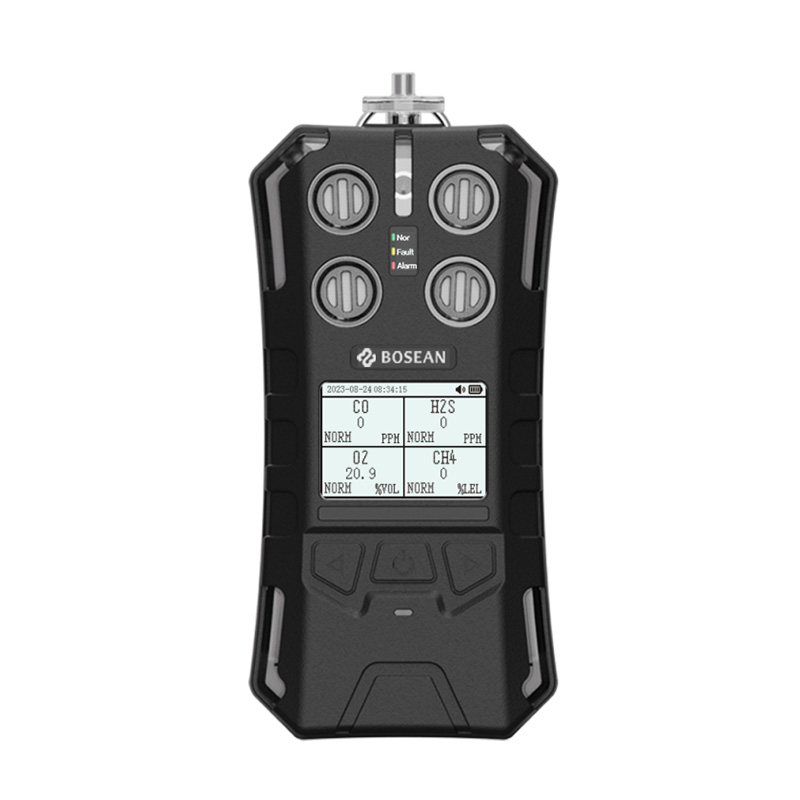
The Bosean S40 4 in 1 Multi Gas Detector offers both natural diffusion and built-in pump-suction sampling. This provides flexibility for different monitoring tasks. Its design incorporates integrated circuit technology, digital-analog hybrid communication technology, and gas sensors selected for sensitivity and repeatability.
- Check Protection, Reliability, and Certification Requirements
Industrial instruments may operate in environments involving dust, moisture, vibration, and potentially explosive atmospheres. Buyers should review enclosure protection, operating limits, and relevant explosion-protection certifications before selecting equipment.
It is important to distinguish between general product descriptions and verified compliance documentation. For example, a housing described as waterproof, dustproof, and explosion-proof does not automatically establish suitability for every hazardous location. The exact certification, protection rating, and permitted operating conditions must match the intended installation or use.
The S40 uses high-strength engineering plastic combined with composite anti-slip rubber. Its product description specifies waterproof, dustproof, and explosion-proof design characteristics. Procurement teams should request the corresponding technical documents to confirm suitability for their specific workplace requirements.
- Consider Calibration, Maintenance, and Technical Support
Initial purchase cost represents only part of the total investment. Gas sensors have service lives, calibration requirements, and maintenance needs that affect long-term operating expenses. Buyers should establish how frequently instruments require functional testing, calibration, sensor replacement, and professional inspection.
A reliable gas detector manufacturer should provide clear technical documentation covering compatible calibration gases, sensor limitations, operating conditions, and maintenance procedures. Availability of replacement components and technical assistance is equally important, particularly for facilities operating multiple instruments across different locations.
Bosean develops and supplies gas detection and measurement instruments and provides technical services to customers. The S40 supports configurable detection of one to four gases according to user requirements and can integrate different sensing principles, including electrochemical technology. Its application range includes petroleum, chemical, environmental protection, smelting, refining, and other industrial fields.
When comparing suppliers, buyers should also evaluate product consistency, documentation quality, service responsiveness, and the availability of application-specific guidance. These factors help determine whether industrial gas detection systems can remain effective throughout their intended service life.
Making a Better Industrial Gas Detection Investment
Selecting suitable detection equipment starts with understanding workplace hazards and matching them to appropriate sensors, sampling methods, and protection requirements. Buyers should then compare maintenance needs, calibration arrangements, technical documentation, and supplier support rather than focusing exclusively on purchase price.
Working with an experienced gas detector manufacturer can help industrial operators clarify technical requirements and evaluate appropriate configurations. With its S40 multi-gas detector and broader gas measurement solutions, Bosean provides equipment options for different industrial monitoring applications. A careful procurement process helps organizations build practical monitoring strategies that support personnel safety and operational reliability.