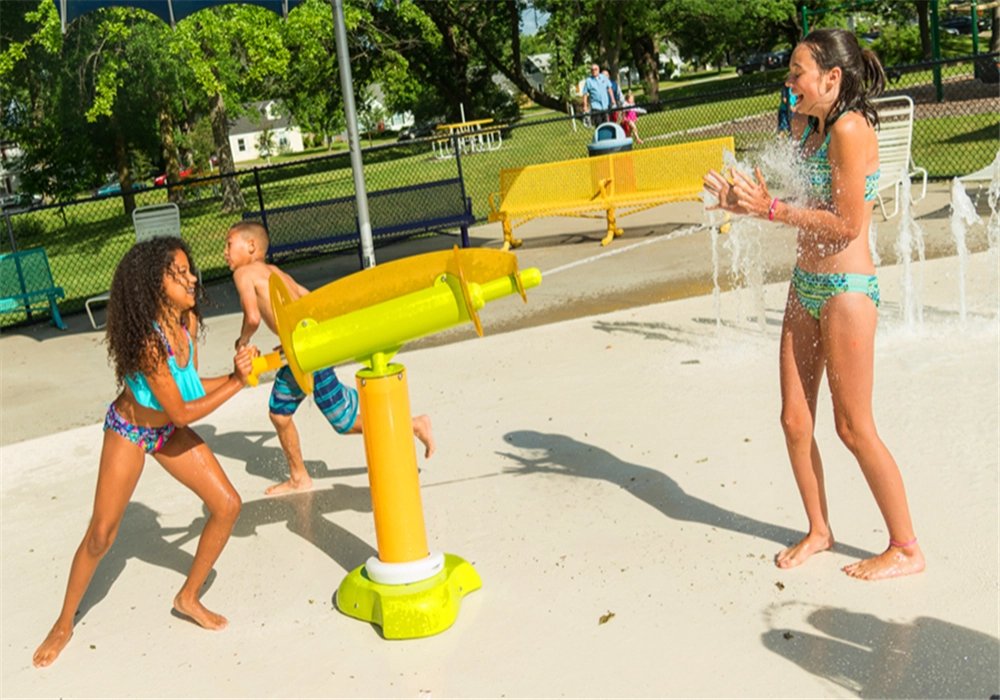
Many resorts own a pool that no longer matches what guests want: too deep, too quiet, or too costly to run. Converting it into a shallow interactive area can be cheaper than building new, and a water park manufacturer can help judge which parts of the old structure are worth keeping before any design is drawn.
Check Whether the Old Pool Can Be Converted
Conversion begins with a structural and hydraulic review. The basin’s condition, depth, and shape determine how much of it can be reused, while the existing pumps, filters, and pipework show whether the water system can serve new features or must be replaced.
Depth and safety are the next checks. Deep sections usually need to be filled or fenced, and edges, steps, and surfaces may need to be rebuilt for shallow, barefoot play. These changes often decide the real cost of the project more than the new equipment does.
A short feasibility note that records these findings helps owners compare conversion against building new. Where the structure is sound, reusing it saves time and demolition; where it is not, the note shows early that a fresh build may be the better route.
Giving Existing Spaces a Second Purpose
Renovation can offer another route into aquatic recreation. An outdated pool may still have useful infrastructure, while its original function no longer matches the expectations of current guests. Splash pad conversion provides one possible strategy for shifting a space toward interactive, shallow-water recreation without treating the entire property as a new-build project.
Such a transformation starts with investigation. Existing basin dimensions, structural conditions, drainage, water supply, electrical capacity, deck surfaces, and maintenance access should be documented before the new layout is developed. These details can reveal which elements are reusable and which require modification, helping the design respond to the site’s actual limitations.
The same principle applies beyond resorts. Community pool renovation can respond to changing neighborhood demographics by adding family-oriented aquatic recreation to facilities that were originally centered on swimming. A carefully planned wading pool conversion may similarly transform a lightly used shallow basin into a more interactive environment, particularly where younger children represent an important user group.
The product application can be adapted to this type of site-specific planning. Jinchao’s Kids Aqua Play uses 304 stainless steel, covers pool areas of approximately 100–500 square units, and incorporates rotating water-spray functions. The quantity is designed according to the available area, allowing the arrangement to correspond with the dimensions of the installation zone rather than relying on one fixed configuration.
Designing Around Movement and Supervision
Water play works differently from a conventional pool because visitors interact with multiple points rather than simply occupying open water. A public aquatic play area therefore benefits from clear movement patterns. Children need room to approach, move between, and leave interactive features, while caregivers require unobstructed sightlines across the active zone.
Spatial variety can make a modest footprint feel more engaging. Different spray directions, heights, rhythms, and activity points create opportunities for children to explore without requiring deeper water. With thoughtful placement, quieter edges can coexist with more energetic central areas, allowing families with different preferences to share the same facility.
Safety also depends on the relationship between wet and dry surfaces. Drainage should prevent unnecessary water accumulation around circulation routes, while surface materials need suitable traction under wet conditions. Entry points, seating locations, maintenance access, and supervision positions deserve equal consideration because each affects how the space functions during busy periods.
For properties considering splash park upgrade work, these details can be more consequential than simply adding new attractions. Existing circulation may need adjustment, drainage capacity may require review, and the relationship between play equipment and surrounding amenities may have to change. A renovation becomes more coherent when the whole user journey is considered rather than treating each physical element independently.
Building Flexible Aquatic Destinations
Long-term usefulness is another reason splash pad conversion has become relevant to resort planning. Guest preferences change with age, family composition, seasons, and travel patterns. Interactive water spaces can accommodate several age groups when their layout includes appropriate activity intensity, comfortable observation areas, and nearby spaces for rest.
Operational planning deserves equal attention. A water park manufacturer may provide equipment expertise, but the finished environment also depends on filtration, water circulation, cleaning access, inspection routines, drainage, and staff procedures. These behind-the-scenes requirements influence whether a newly developed space remains practical after the initial installation period.
The concept of community pool renovation can likewise extend beyond physical refurbishment. A renewed facility may support family programming, seasonal activities, community events, or different daily schedules. Meanwhile, wading pool conversion can give an underused basin a new function without requiring the entire aquatic site to adopt the same recreational model.
Conclusion
The changing role of aquatic recreation reflects a wider movement toward resort spaces that combine leisure, social interaction, and flexible use. Splash pad conversion can contribute to that direction when the survey of the old pool is honest, the layout responds to real visitor behavior, and the water system is upgraded along with the visible features.
Jinchao demonstrates how site dimensions and material choices can shape aquatic installations, while a splash park upgrade or splash pad conversion may give existing spaces a renewed purpose. Ultimately, thoughtful water environments are less about adding more features and more about creating places where recreation fits naturally into the way guests experience a destination.