Diesel exhaust contains pollutants that do not respond to a single treatment mechanism. Carbon monoxide and unburned hydrocarbons can be oxidized, while soot must be trapped and nitrogen oxides require another reaction path.
A diesel oxidation catalyst, or DOC, occupies an upstream position in many aftertreatment layouts because it changes both the chemical composition and, under suitable conditions, the thermal state of the gas that reaches downstream devices.
Integration concerns interfaces, not merely placing components in a row. The DOC’s direct oxidation duty differs from the benefits it may create for a diesel particulate filter, or DPF, and for selective catalytic reduction, or SCR. Exhaust temperature, flow, and the ratio of nitric oxide to nitrogen dioxide govern whether those secondary effects are available during operation.
Define the DOC’s Direct Oxidation Duty
The initial role of diesel oxidation catalysts is to oxidize carbon monoxide, hydrocarbons, and soluble organic fractions. With adequate temperature and oxygen, those reactions form carbon dioxide and water. That description does not mean a DOC physically filters soot. Particulate capture belongs to a wall-flow filter, whose channels force the gas through porous walls while retaining solid material.
Reaction rates are not constant across a representative driving cycle. During cold or low-load operation, the catalyst may spend time below its effective activity range; higher exhaust flow also changes the available contact time.
Substrate size, cell density, and coating formulation must consequently be evaluated against a distribution of operating conditions. A converter that performs well at one steady test point may not deliver the same conversion over a variable engine duty cycle.
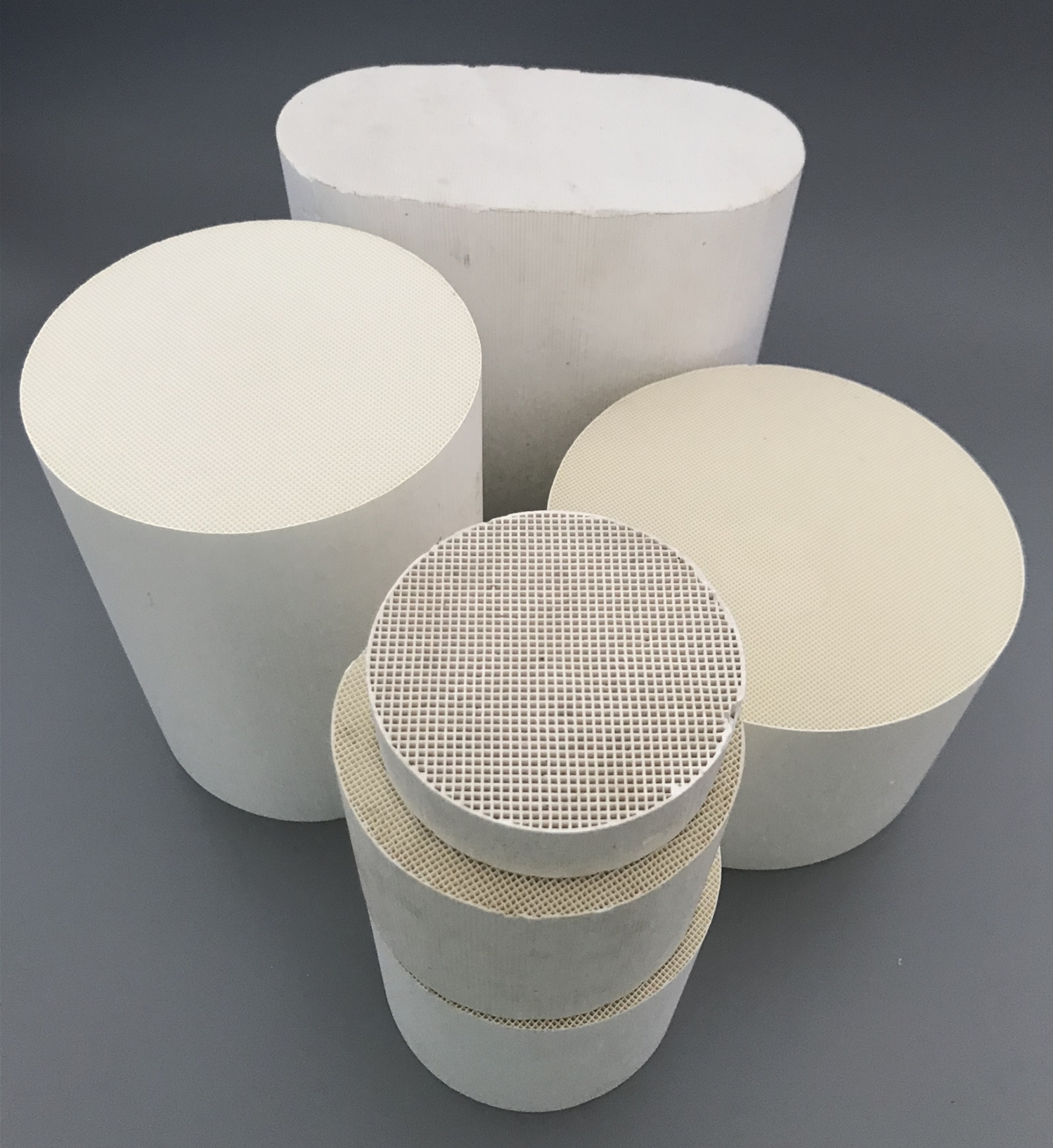
Ceramic and metallic substrates give the DOC designer different starting points for managing heat and flow. Both are available from Hualian Catalyst for oxidation of CO, HC, and soluble organic fractions, with customizable sizes, CPSI, and coating formulations.
Packaging sets the permitted volume; gas distribution, pressure loss, and catalytic surface then constrain the build within it. The engine’s exhaust profile supplies the operating conditions for that balance.
Track What Changes before the DPF
Oxidation of nitric oxide to nitrogen dioxide is a separate DOC function with consequences downstream. A higher NO₂ share may assist passive soot oxidation in a DPF when temperature and other conditions permit.
It can also affect the fast-SCR reaction, which depends on the balance of NO and NO₂. Neither outcome follows automatically from installing a DOC: the gas composition after the catalyst and the operating temperature must be measured in the intended system.
Hydrocarbon oxidation can also release heat. In an active DPF regeneration strategy, additional fuel or hydrocarbons may be introduced upstream so oxidation raises the exhaust temperature reaching the filter.
The DOC must then be matched to the amount and distribution of hydrocarbons, as well as to thermal limits of adjacent components. Too little heat may leave collected soot in place; excessive or poorly distributed heat can create durability concerns.
The DPF itself adds flow resistance that changes as soot accumulates. DOC pressure loss therefore cannot be assessed in isolation from filter loading, regeneration frequency, and the engine’s allowable backpressure.
Catalytic converter manufacturers need system data to judge whether an upstream substrate’s cell density and dimensions leave an acceptable pressure budget for the complete exhaust path. That budget should be checked with both a clean filter and a representative soot load, since a favorable initial reading may disappear before the next regeneration event.
Coordinate Temperature, Flow, and Downstream Chemistry
An SCR unit reduces NOx through a different chemistry from DOC oxidation. The upstream DOC may alter the NO₂/NOx ratio in ways that favor certain SCR reaction pathways, but the final effect depends on catalyst formulation, reductant dosing, and temperature. A high NO₂ fraction is not a universal benefit; the relevant target is the composition expected at the SCR inlet over the duty cycle.
The same need for coordination applies to heat. A DOC that supports DPF regeneration may change the temperature entering later components. Thermal margins, sensor placement, and control strategy must be considered together.
Bench measurements of conversion, pressure drop, and outlet temperature are useful inputs, while installed-system tests establish how those measurements interact with the actual engine and control calibration. Diesel oxidation catalysts also need evaluation after relevant aging, because an installation judged only with a fresh unit may overstate the heat and chemical conversion available later in service.
DOC oxidation targets specify upstream gas changes; the DPF’s filtration and regeneration requirements constrain the heat and chemical composition subsequently reaching the SCR inlet.
Exhaust flow and temperature ranges set the conditions for judging every requirement in this system. Hualian’s selectable substrate and coating options can be evaluated within that framework without assigning downstream results to the DOC alone.
Diesel oxidation catalysts are most useful when their direct reactions and downstream effects are kept distinct. The DOC treats selected gaseous pollutants, may create NO₂ or heat useful to other devices, and imposes its own flow and thermal characteristics. Catalytic converter manufacturers can assess the complete system only by checking whether those changes reach the DPF and SCR under engine conditions.